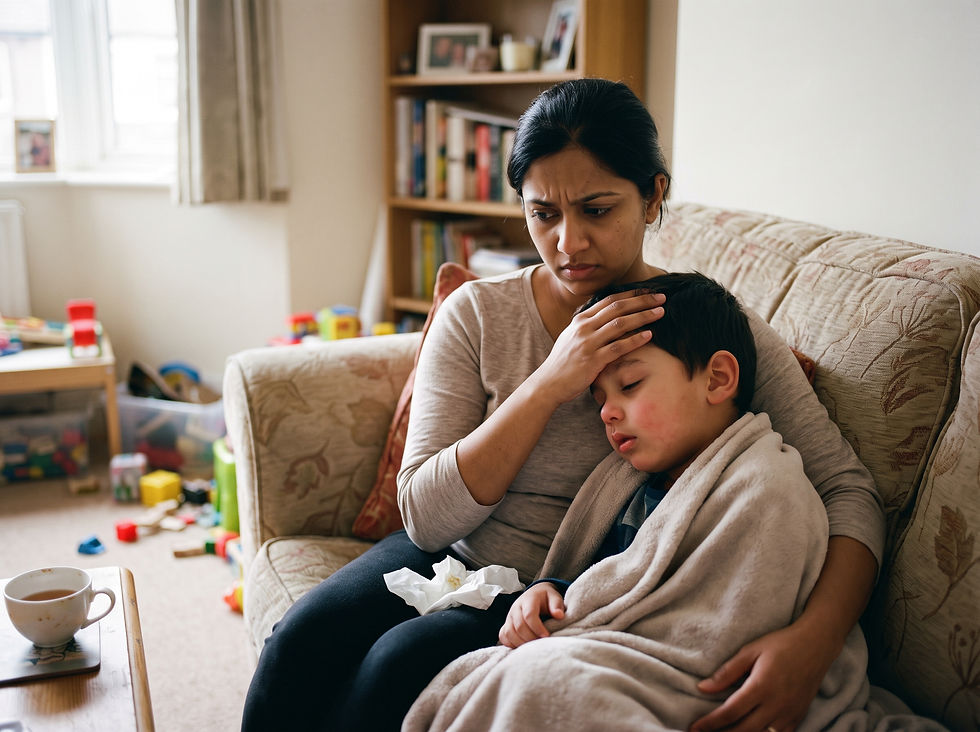
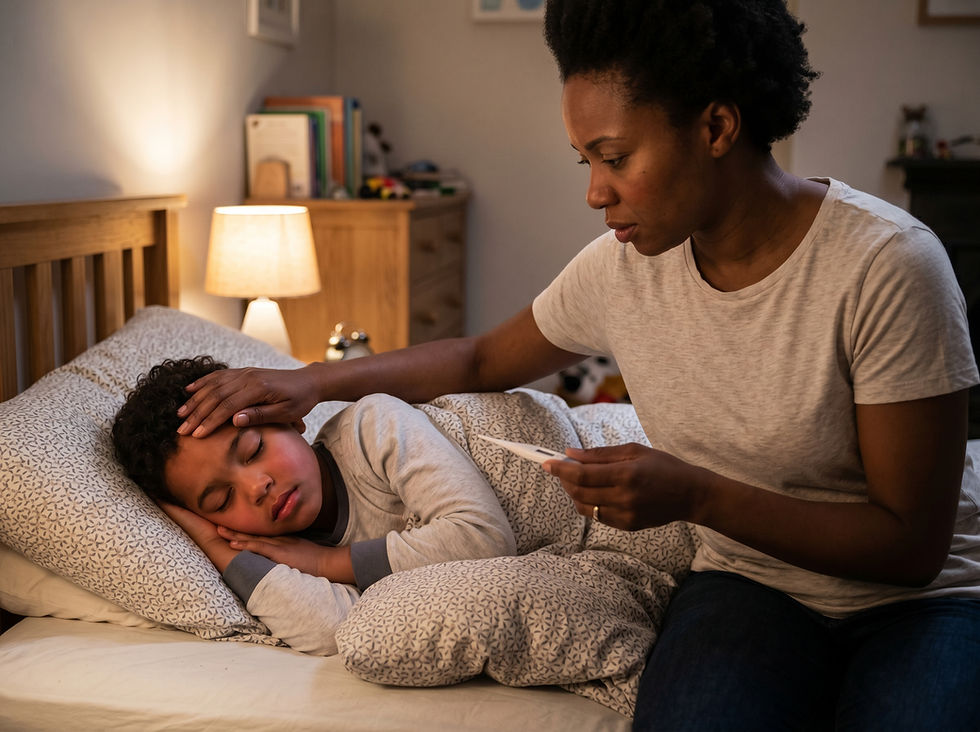
Q: My child's high fever improved to a low-grade fever but spiked again to 38.6°C. Is this normal, or should we see a doctor?

Medically reviewed by Sang Hyun Ahn, MD
Content edited by Myeongchan Kim, MD
This post is a dramatization of a question and answer session experienced by our actual medical reviewers. Please note that this content is for informational purposes only and does not constitute medical advice. Always consult with a qualified healthcare professional for any health concerns or before making any decisions related to your health or treatment.
Question:
My child had a high fever ranging from 38.2°C to 40.2°C three days ago, which seemed to improve to around 37.6°C two days ago and stayed at a low-grade 37.7°C yesterday. However, this morning the fever climbed back up to 38.6°C. We still have prescribed medicine left for another day. Is this fever pattern normal, or should I take my child back to the clinic today? My child's general energy and mood are still good, so I haven't given a fever reducer yet today.

Answer:
It is understandable to be concerned when a fever fluctuates and spikes again after appearing to improve.
A pattern where a high fever drops to a low-grade fever and then rises again can sometimes occur during the course of a viral infection. However, a fever that rebounds or persists needs to be watched closely.
When you should see a doctor today:
The fever persists into a fourth day (especially if it climbs to 39°C or higher).
New symptoms develop, such as a rash, rapid or labored breathing, ear tugging, or a severe headache.
Signs of dehydration appear, such as refusing fluids, dry lips, or significantly fewer wet diapers/infrequent urination.
Your child becomes unusually lethargic, weak, or inconsolably irritable.
When it is generally safe to monitor at home:
Your child remains active, plays normally, and continues to drink fluids well.
There are no new or worsening red-flag symptoms.
The child appears comfortable and responds well when fever reducers are used.
Since your child is currently in good condition and behaving normally, it is reasonable to keep a close eye on them at home for the morning. Ensure they stay well-hydrated, and give an antipyretic if they become uncomfortable or if the temperature rises. If the fever reaches 39°C or higher, if their general condition declines, or if the fever extends into a fourth day, consult your pediatrician for an in-person evaluation and potential further testing.

For extra peace of mind and clear guidance when tracking your child's symptoms, the FeverCoach app is always there to help.