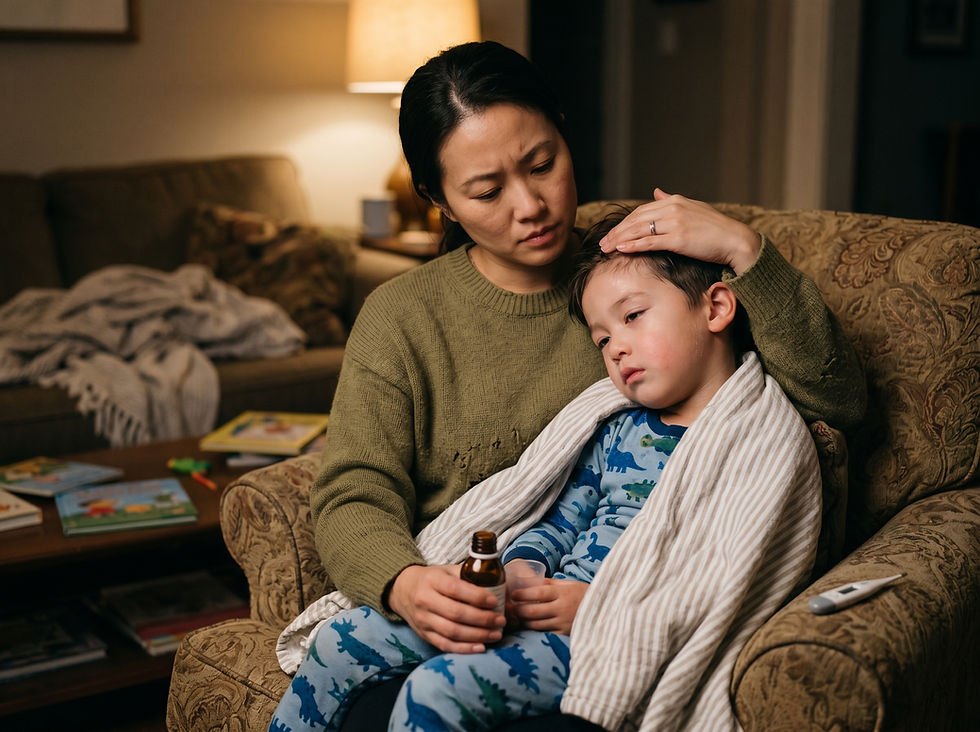
Q: My child has had a low-grade fever for 4 days with a cough. Could it be pneumonia, and should we see a doctor?

Medically reviewed by Sang Hyun Ahn, MD
Content edited by Myeongchan Kim, MD
This post is a dramatization of a question and answer session experienced by our actual medical reviewers. Please note that this content is for informational purposes only and does not constitute medical advice. Always consult with a qualified healthcare professional for any health concerns or before making any decisions related to your health or treatment.
Question:
My child has had a persistent low-grade fever (around 37.6°C to 38.2°C) for the past 4 days, starting on Sunday. When given fever reducers, the temperature returns to normal for about 8 to 10 hours before rising again. They were fever-free from Tuesday evening until 3 PM today, but around 4 PM the fever returned to 37.7°C. They also have a runny nose and a productive cough with phlegm and are currently taking prescribed cold medicine. Since it is now the fourth day of this low-grade fever, should I be concerned about pneumonia and take them back to the clinic, or is it okay to monitor them at home a bit longer?
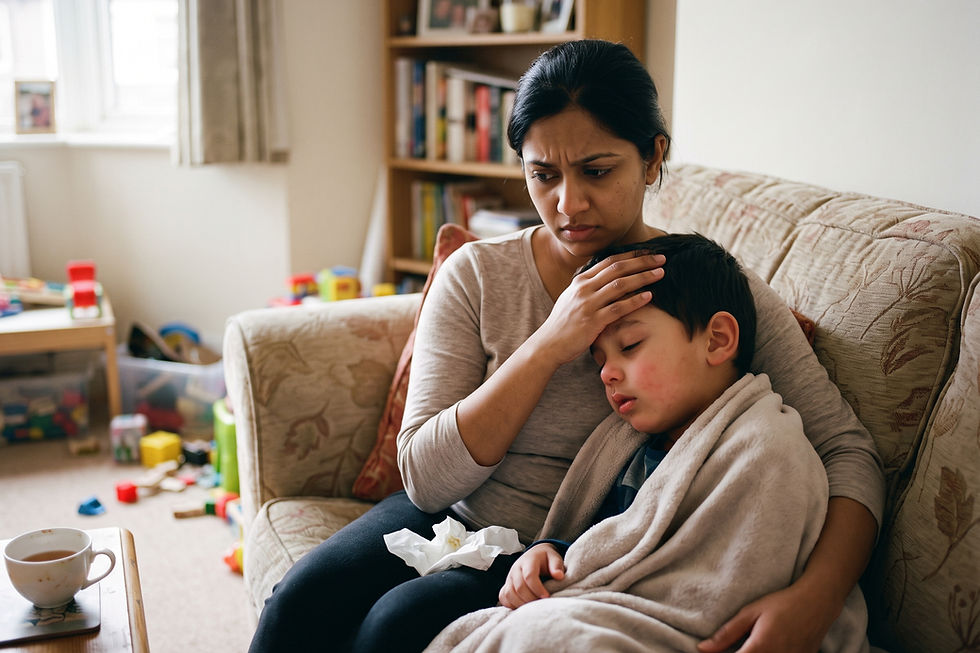
Answer:
It is completely understandable to feel concerned when a low-grade fever lingers for four days, especially alongside a productive cough.
While viral respiratory infections commonly cause fevers and coughs that last several days, secondary complications like pneumonia or bronchitis can sometimes develop. Here is how you can determine whether an immediate medical evaluation is necessary.
Warning Signs Requiring an Immediate In-Person Visit
Take your child to a pediatrician or urgent care center today if you notice any of the following red flags:
Breathing difficulties: Rapid breathing, flaring nostrils, or chest retractions (skin pulling tightly between or below the ribs when breathing).
Color changes: Bluish or pale lips, tongue, or nail beds.
Severe lethargy: Unusually listless, weak, unable to interact, or difficult to wake.
Signs of dehydration: Refusing fluids, dry mouth, crying without tears, or no wet diapers/urination for 8 hours or more.
Pain: Complaints of localized chest or abdominal pain.
Worsening cough: A cough that is visibly escalating in severity, causing choking/vomiting, or preventing sleep.
When It Is Safe to Monitor at Home
If your child does not have any of the warning signs above, is drinking liquids well, remains active when the fever is down, and can sleep comfortably, it is generally reasonable to observe them at home overnight. However, if the fever persists into tomorrow or the cough continues to worsen, you should schedule a follow-up evaluation with their doctor.
At-Home Supportive Care
Encourage frequent fluids: Offer small sips of water, broth, or an oral rehydration solution every 5 to 10 minutes to maintain hydration and thin out mucus.
Clear nasal congestion: Use saline nasal spray followed by a bulb syringe or nasal aspirator to clear mucus, especially before meals and sleep.
Optimize humidity: Keep the room's humidity between 40% and 60% with a cool-mist humidifier.
Manage fever based on comfort: At 37.7°C (99.9°F), medication is generally not required unless your child appears uncomfortable or fussy. Treat their comfort rather than the number on the thermometer.
Elevate their upper body: If nighttime coughing disrupts sleep, gently propping up your child's head and upper torso (for children over 1 year of age) can help ease drainage.
If your child was recently evaluated and is already on medication, you can call their pediatrician's office to inform them that the low-grade fever has reached day four and ask if a re-examination is warranted. If red flags develop outside of normal clinic hours, seek care at an urgent care clinic or emergency room right away.

For extra peace of mind and clear guidance when tracking your child's symptoms, the FeverCoach app is always there to help.