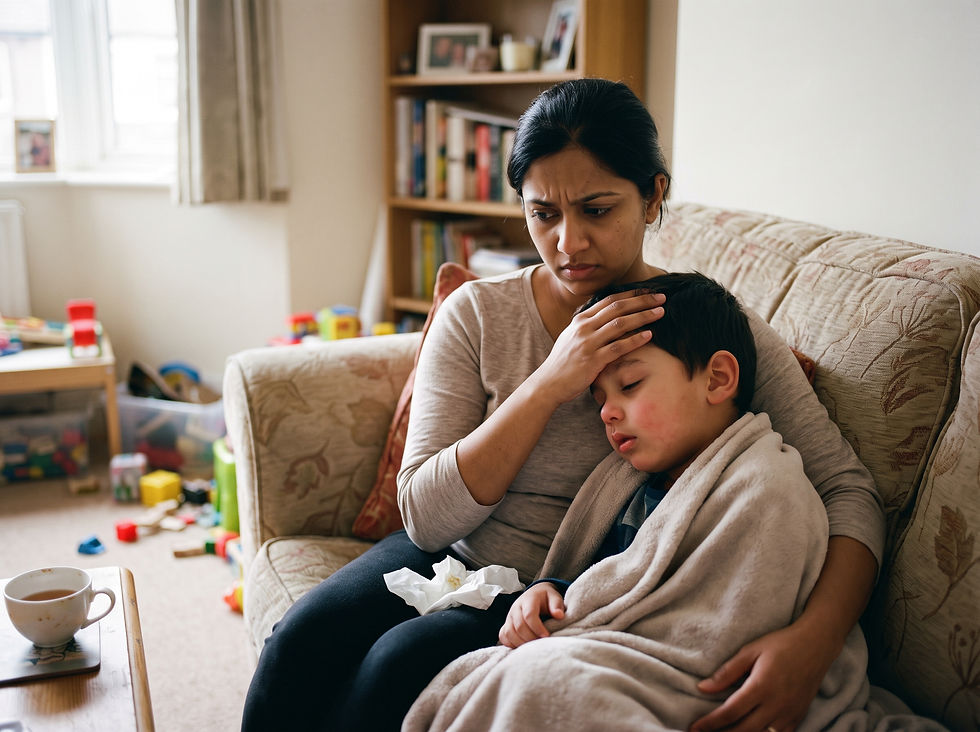
Q: Can a child have chills with a low-grade fever of 37.6°C during Mycoplasma pneumonia, and is sweating normal?

Updated: 1 day ago
Medically reviewed by Sang Hyun Ahn, MD
Content edited by Myeongchan Kim, MD
This post is a dramatization of a question and answer session experienced by our actual medical reviewers. Please note that this content is for informational purposes only and does not constitute medical advice. Always consult with a qualified healthcare professional for any health concerns or before making any decisions related to your health or treatment.
Question:
My child was diagnosed with Mycoplasma pneumonia. They had a fever for three days (which required a fever reducer once) followed by a low-grade fever over the next two days. Even at 37.5°C to 37.6°C (99.5°F–99.7°F), my child complains of feeling cold and seems to have chills. Can chills occur with such a mild temperature? Can the fever spike again just when they seem to be recovering? Also, I put a sleep vest on them because they were cold, but now they are sweating—is that a sign that they are improving?

Answer:
It is understandable to be concerned when you see your child shivering despite only having a mild temperature. Here is what is happening and how you can best care for your child:
1. Why Chills Can Happen at 37.6°C
Yes, a child can experience chills even with a low-grade fever. Body temperature is controlled by the hypothalamus, which acts like an internal thermostat. When the body fights an infection, this "thermostat" is set higher. If the set point goes up to 38.5°C while the current body temperature is only 37.6°C, the body perceives itself as too cold. This triggers shivering and chills to generate heat and raise the temperature.
2. Can the Fever Fluctuate or Spike Again?
Yes. With Mycoplasma pneumonia, it is very common for body temperature to fluctuate for 2 to 3 days even after starting the correct antibiotic. In many cases, it takes 5 to 7 days for the fever to completely resolve. Seeing mild spikes or a seesaw pattern during the first few days of treatment does not necessarily mean the medication is failing.
3. Is Sweating a Good Sign?
Yes, sweating is generally a positive sign. While chills indicate that the body temperature is on the way up, sweating indicates that the internal thermostat has reset downward and the body is actively releasing excess heat (the fever is "breaking").
How to Manage Your Child Right Now:
During Chills: Cover your child with a single, light blanket to keep them comfortable. Avoid heavy clothing or thick bundles, as overbundling can trap too much heat once the shivering stops.
During Sweating: Remove heavy sleep vests or extra layers. Change any damp clothing or bedsheets promptly to keep them comfortable and prevent sudden cooling.
Hydration: Offer small, frequent sips of lukewarm water or an electrolyte solution to replenish fluids lost through sweating.
Medication: Ensure your child completes the entire course of prescribed antibiotics (such as azithromycin), even if their symptoms seem to improve.
Warning Signs Requiring Immediate Medical Attention:
Contact your doctor or visit the nearest clinic immediately if you notice any of the following:
Breathing difficulties: Rapid breathing (e.g., more than 30 breaths per minute in a child aged 5 or older), nostril flaring, or chest retractions (the skin sucking in under the ribs).
Persistent high fever: A temperature of 38.5°C (101.3°F) or higher that continues past 3 days of starting antibiotics.
Signs of dehydration: Refusing liquids, crying without tears, or having no wet diapers/urination for 8 hours or more.
Altered alertness: Extreme lethargy, unusual drowsiness, or difficulty waking up.
If your child is on their third day of antibiotics and continues to have fluctuating fevers or frequent chills, contact your prescribing pediatrician. They can evaluate your child’s recovery progress and decide if an in-person follow-up examination or an adjustment in medication is needed.

For extra peace of mind and clear guidance when tracking your child's symptoms, the FeverCoach app is always there to help.