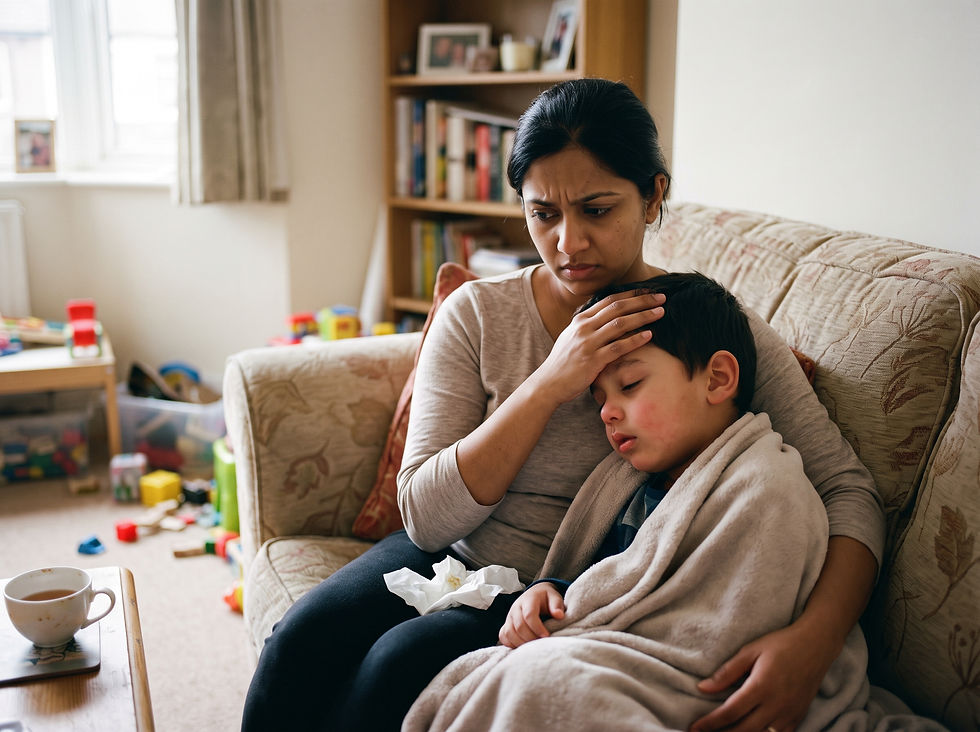
Q: My child has had a persistent low-grade fever between 37.3°C and 37.7°C for over a month. Should we see a doctor?

Updated: 3 days ago
Medically reviewed by Sang Hyun Ahn, MD
Content edited by Myeongchan Kim, MD
This post is a dramatization of a question and answer session experienced by our actual medical reviewers. Please note that this content is for informational purposes only and does not constitute medical advice. Always consult with a qualified healthcare professional for any health concerns or before making any decisions related to your health or treatment.
Question:
My child was diagnosed with bronchitis about a month ago and completed a course of antibiotics. The cough and phlegm have completely resolved, leaving only mild nasal congestion, but a low-grade temperature fluctuating between 37.3°C and 37.7°C has persisted for over 40 days. A previous blood test showed normal inflammatory markers, and the doctor advised returning if the fever exceeded 38.0°C.

Recently, however, the pattern changed: previously, the temperature was normal during the day and reached 37.5–37.6°C only in the evening, but over the last two days, it has been 37.5°C during the day and 37.7°C at night. Because we live far from the nearest clinic, should we continue to wait and monitor as long as it stays below 38.0°C, or is it time to have this checked?
Answer:
While a temperature between 37.5°C and 37.7°C can often sit at the upper boundary of normal baseline body temperature—depending on the child's activity level, ambient environment, or time of day—having readings in this range for over 40 days warrants an in-person medical evaluation.
Here is why a follow-up visit is recommended despite the temperature staying below 38.0°C:
Prolonged Duration: More than a month is too long to attribute simply to the aftermath of a mild respiratory infection.
Shift in Pattern: The transition from an isolated evening elevation to persistent low-grade readings throughout both day and night suggests that the baseline has shifted rather than just following normal circadian temperature fluctuations.
Underlying Conditions to Exclude: A persistent low-grade fever can occasionally point to lingering issues that require specific treatment, such as chronic sinusitis, a urinary tract infection (UTI), or other non-respiratory causes.
Before your visit, take note of the following signs to share with the physician:
General energy, mood, and activity levels
Appetite and fluid intake
Any recent weight loss or failure to gain weight
Any complaints of stomach pain, joint discomfort, or new skin rashes
Even without a high fever exceeding 38.0°C, the extended duration justifies further diagnostic tests, such as a urinalysis, repeat blood work, or imaging. Arrange for an in-person medical evaluation with a pediatrician this week to determine the cause. If your child develops lethargy, poor intake, or a sudden spike in fever above 38.0°C, seek medical care promptly.

For extra peace of mind and clear guidance when tracking your child's symptoms, the FeverCoach app is always there to help.