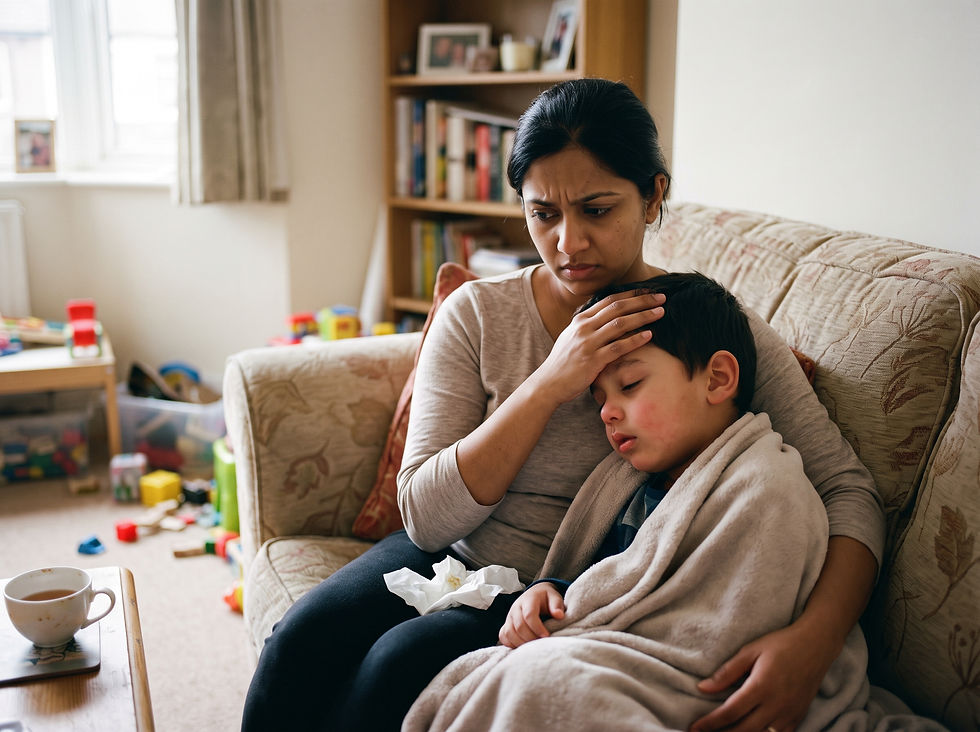
Q: My child has had an evening low-grade fever around 37.8°C for 2 weeks with no other symptoms. Could it be something serious?

Updated: 7 days ago
Medically reviewed by Sang Hyun Ahn, MD
Content edited by Myeongchan Kim, MD
This post is a dramatization of a question and answer session experienced by our actual medical reviewers. Please note that this content is for informational purposes only and does not constitute medical advice. Always consult with a qualified healthcare professional for any health concerns or before making any decisions related to your health or treatment.
Question:
My child has had a low-grade fever between 37.8°C and 37.9°C (100.0°F–100.2°F) every evening for the past two weeks. There are no other symptoms at all. I am terrified that it might be something serious like cancer. Can this happen without an obvious illness, and what could be causing it?

Answer:
It is completely understandable to feel anxious when a child has an unexplained low-grade fever that repeats every evening, especially when it lasts for two weeks.
A temperature between 37.8°C and 37.9°C is considered a mild elevation, and experiencing this exclusively in the evening is a recognized pattern. In many cases, this is linked to benign causes rather than a severe illness:
Normal Daily Temperature Fluctuations: The human body has a natural circadian rhythm where body temperature is at its lowest in the early morning and can rise by about 0.5°C (around 1°F) by the late afternoon or evening.
Recovery from a Mild Viral Infection: Even after typical respiratory or gastrointestinal symptoms have cleared, the body's thermoregulatory center can take several weeks to fully reset.
Physical Activity: Active, growing children generate a significant amount of heat. Vigorous running or playing in the afternoon can keep body temperature slightly elevated into the evening.
Environmental Factors: Overdressing, warm room temperatures, or thick blankets can raise a child’s skin and core temperature.
While severe conditions like malignancies are often a parent's biggest fear, they are very rare and typically accompanied by systemic symptoms. To help evaluate the situation, pay attention to the following signs:
Energy and Behavior: Is your child eating, playing, and sleeping well during the day?
Weight Changes: Has your child had any unexplained weight loss or a persistent lack of appetite?
Lymph Nodes: Are there any swollen, firm, or tender lumps in the neck, armpits, or groin?
Skin Changes: Do you see unusual paleness, unexplained bruises, or persistent rashes?
If your child is active, happy, and acting normally during the day, that is a very reassuring sign.
However, because this pattern has persisted for more than two weeks, the most sensible next step is to consult a pediatrician. A physician can perform a comprehensive physical examination and order basic screening tests, such as a complete blood count (CBC), to rule out hidden infections and provide peace of mind. Seek prompt medical evaluation if the fever exceeds 38.5°C (101.3°F), or if you notice swollen lymph nodes, drenching night sweats, or a noticeable drop in your child's energy levels.

For extra peace of mind and clear guidance when tracking your child's symptoms, the FeverCoach app is always there to help.