
Q: My child has a severe cough and suddenly developed a fever after starting antibiotics. Should we go to the ER?

Updated: Sep 7
Medically reviewed by Sang Hyun Ahn, MD
Content edited by Myeongchan Kim, MD
This post is a dramatization of a question and answer session experienced by our actual medical reviewers. Please note that this content is for informational purposes only and does not constitute medical advice. Always consult with a qualified healthcare professional for any health concerns or before making any decisions related to your health or treatment.
Question:

My 5th-grade child has been coughing for 4 days. The cough got really severe yesterday and today, so we went to a local pediatrician. The chest X-ray was clear, and we did a PCR test for pertussis and mycoplasma, but the results won't be out for another two days. We started antibiotics yesterday, but today my child suddenly developed a fever. Does this mean the antibiotics aren't working? I plan to alternate fever-reducing medications, but I am panicked by the sudden fever. Should we just keep taking the antibiotics and wait two days for the test results, or should we go to a larger hospital or the ER right away?
Answer:
It is completely understandable that you are worried about your child's persistent cough and sudden fever, especially while waiting for test results.
Current Situation Assessment:
Developing a new fever on the second day of taking antibiotics is a relatively common progression. Antibiotics typically take about 48 to 72 hours to start showing their full effect. A fever developing after a few days of coughing can either be a progression of the original infection or a sign of a secondary infection.
What You Can Do Now:
Manage the fever: Alternating fever reducers (such as acetaminophen and ibuprofen at 4-hour intervals) is a good and safe approach.
Hydration: Ensure your child stays well-hydrated. Offer plenty of warm water or honey tea to help soothe the throat.
Comfort measures: Use a humidifier in their room and elevate their head slightly while sleeping to help ease the cough.
Monitor: Keep a detailed record of their fever patterns and how the cough sounds.
When to Visit the Emergency Room:
Please take your child to the ER immediately if you observe any of the following severe symptoms:
Difficulty breathing or wheezing
Chest retractions (the skin pulling in around the ribs or neck when breathing)
Pale or bluish lips or face
Persistent high fever (over 39.5°C or 103.1°F)
Severe headache or chest pain
Next Steps:
For now, it is generally safe to manage the fever at home, continue the prescribed antibiotics, and carefully observe your child's condition while waiting for the PCR test results. However, if your child's condition rapidly deteriorates or they show any of the emergency signs listed above, seek immediate medical attention at an ER. If the fever continues into tomorrow or the cough progressively worsens, please visit a larger children's hospital or follow up with your pediatrician for further evaluation.
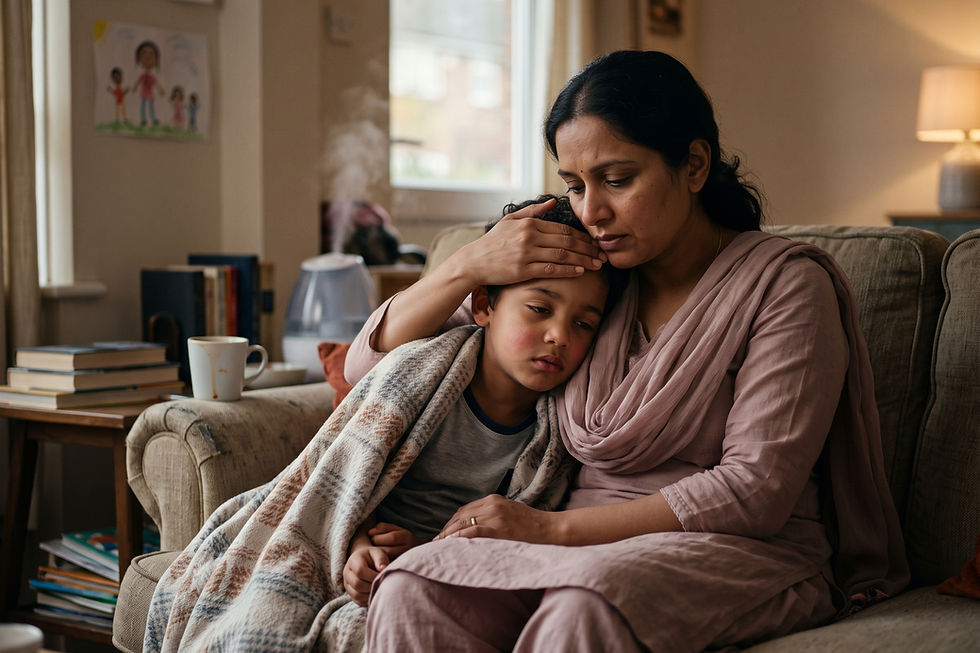
For extra peace of mind and clear guidance when tracking your child's symptoms, the FeverCoach app is always there to help.