Q: My 34-Month-Old Fell Off the Bed and Had a Nosebleed While We Are Traveling. Should We Go to the Hospital?

Updated: 7 days ago
Medically reviewed by Sang Hyun Ahn, MD
Content edited by Myeongchan Kim, MD
This post is a dramatization of a question and answer session experienced by our actual medical reviewers. Please note that this content is for informational purposes only and does not constitute medical advice. Always consult with a qualified healthcare professional for any health concerns or before making any decisions related to your health or treatment.
Question:
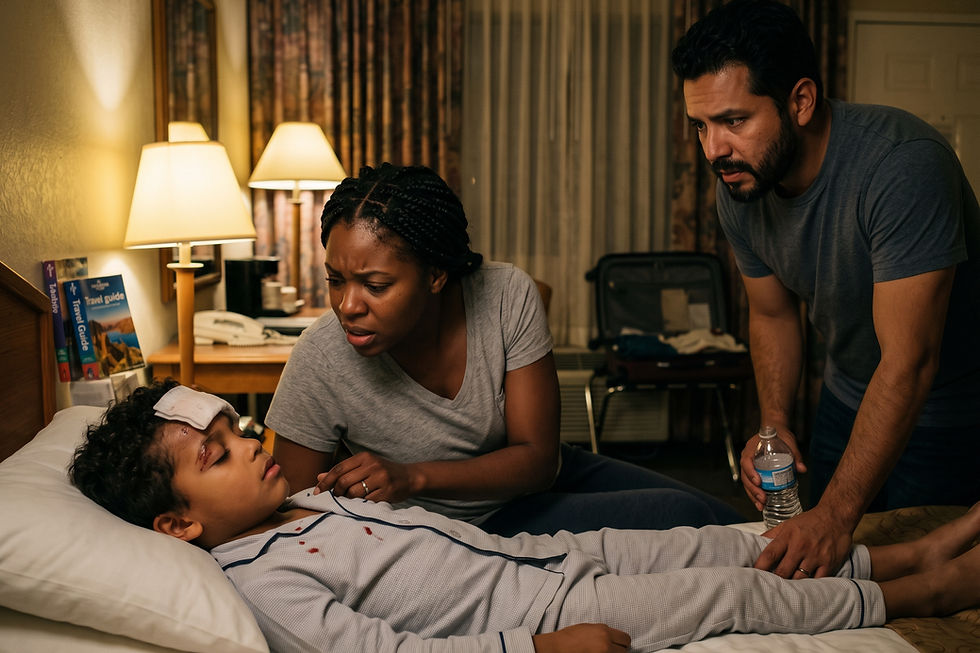
We are currently traveling abroad, and our 34-month-old toddler fell off the bed while sleeping. It looked like the child landed face-first, and immediately after the fall, blood came from both nostrils. After crying and being comforted, the child fell back asleep (it had been a very exhausting day). The child is sleeping and shifting around normally, but because we are in another country, I am very anxious. Should we find a local emergency room or hospital right away?

Answer:
It is understandably frightening when a child falls and bleeds, especially while you are traveling away from home.
Here is what you should evaluate immediately:
Responsiveness: Wake your child gently. When you call their name, do they open their eyes, recognize you, and respond normally?
Vomiting: Watch closely for any vomiting during sleep or repeated episodes (2 or more times).
Behavioral changes: Observe whether they are excessively lethargic, unusually difficult to wake, or acting confused or dazed.
The nosebleed: Confirm whether the bleeding has stopped completely.
Signs that require an immediate visit to a local emergency room:
Go to the nearest emergency department if you notice any of the following:
Difficulty waking up or failing to respond normally
Repeated vomiting (two or more times)
Inconsolable, persistent crying or apparent severe head pain
A nosebleed that lasts longer than 10 minutes or starts again
Clear fluid or blood draining from the ears or mouth
Abnormal movements, unsteady walking, or weakness in the arms or legs
Any seizure activity or twitching
What to do if your child appears stable:
If none of the warning signs above are present and the bleeding has resolved, you can monitor your child closely for the next 24 hours:
Gently wake your child every 2 to 3 hours overnight to ensure they can be roused and react normally.
Keep activities calm and quiet the next day (avoid running, jumping, or theme park rides).
Continue to look for delayed symptoms.
Regarding the nosebleed itself:
A direct impact to the face can easily cause the delicate blood vessels in the nasal mucosa to tear, resulting in bleeding from both sides. If the bleeding stopped quickly on its own, the nosebleed itself is typically not a sign of serious injury.
In summary, if your child wakes up normally, interacts as usual, and does not vomit, continued close monitoring is generally reasonable. However, if any red flag signs develop, or if you remain uncertain about your child's condition, seek an in-person medical evaluation at a local medical facility immediately.
For extra peace of mind and clear guidance when tracking your child's symptoms, the FeverCoach app is always there to help.