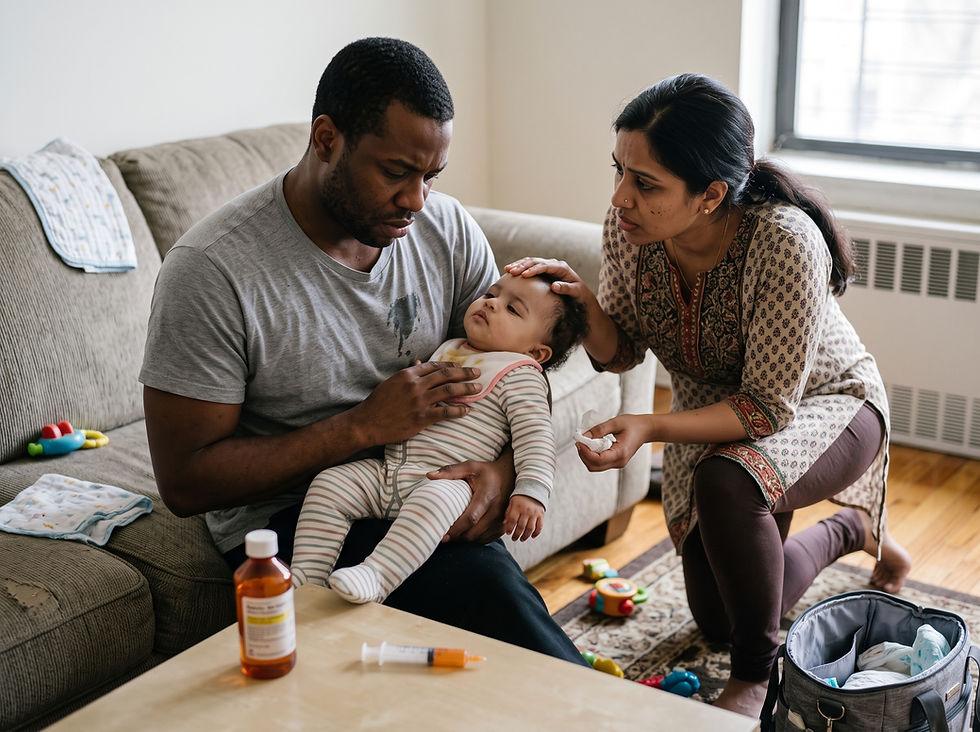
Q: My 14-month-old has a high fever, vomited, and is wheezing after vaccines. Should I wait and watch?

Updated: Oct 30
Medically reviewed by Sang Hyun Ahn, MD
Content edited by Myeongchan Kim, MD
This post is a dramatization of a question and answer session experienced by our actual medical reviewers. Please note that this content is for informational purposes only and does not constitute medical advice. Always consult with a qualified healthcare professional for any health concerns or before making any decisions related to your health or treatment.
Question:
My 14-month-old received their second Japanese encephalitis shot and first flu shot this morning. They have developed a high fever and vomited, which has never happened after previous vaccinations. The doctor mentioned earlier that my baby had a slight runny nose, and now they are making a wheezing or noisy breathing sound while asleep. Should I continue to observe the fever and vomiting at home, or should I take them to be seen?

Answer:
It is understandable to be concerned when a toddler experiences a high fever, vomiting, and noisy breathing shortly after receiving vaccines. While mild side effects like low-grade fever and fussiness can happen, the combination of high fever, vomiting, and respiratory symptoms requires careful monitoring.
1. Check for Red Flag Symptoms (Seek Immediate Medical Care)
Go to an urgent care center or emergency room immediately if you observe any of the following signs:
Breathing distress: The chest or area under the ribs pulls in deeply with each breath (retractions), lips or nails look pale or bluish, or the wheezing/noisy breathing worsens.
Lethargy: The child is limp, unusually difficult to wake, or cannot make eye contact or focus on you.
Persistent vomiting: They cannot keep any fluids down or continue to vomit repeatedly.
Significant dehydration: No wet diapers for 6 to 8 hours, lack of tears when crying, or a very dry mouth.
2. How to Care for Your Child at Home
If your baby is waking easily, making eye contact, and showing no signs of severe distress, you can monitor them closely with these supportive measures:
Gentle hydration: Do not offer large volumes at once, as this can trigger the vomiting reflex. Instead, give 1 to 2 teaspoons (5–10 mL) of water, breast milk, formula, or oral rehydration solution every 5 to 10 minutes.
Fever management: Dress them in lightweight clothing and keep the room at a comfortable temperature (around 20–22°C or 68–72°F). You may use age-appropriate fever reducers (such as acetaminophen or ibuprofen, adhering to weight-based dosing) if your child seems uncomfortable. Avoid cold water baths or ice packs, as these can cause shivering and raise core temperature.
Sleep positioning: Elevating their upper body slightly can help clear airway secretions if nasal congestion is contributing to the noisy breathing.
Close monitoring: Check on your child every 2 to 3 hours through the night to assess their breathing rate, color, responsiveness, and hydration.
3. Vaccine Reactions vs. Other Illnesses
Mild fever, irritability, or an isolated episode of vomiting can occur within 24 to 48 hours after the Japanese encephalitis and influenza vaccines. However, a high fever combined with repeated vomiting and respiratory symptoms (such as wheezing or stridor) is often due to an overlapping viral illness that was already incubating, or a more pronounced immune response.
Recommended Next Steps
Plan to contact your pediatrician or the clinic where the vaccines were administered first thing in the morning if the fever persists, if vomiting happens again, or if the noisy breathing continues. However, if your child shows any signs of labored breathing, significant lethargy, or signs of dehydration overnight, do not wait—seek an immediate in-person medical evaluation at the nearest emergency department or urgent care facility.

For extra peace of mind and clear guidance when tracking your child's symptoms, the FeverCoach app is always there to help.