
Q: My child's fever worsened after an influenza B IV treatment. Could it be pneumonia?

Updated: Sep 6
Medically reviewed by Sang Hyun Ahn, MD
This post is a dramatization of a question and answer session experienced by our actual medical reviewers. Please note that this content is for informational purposes only and does not constitute medical advice. Always consult with a qualified healthcare professional for any health concerns or before making any decisions related to your health or treatment.
Question:
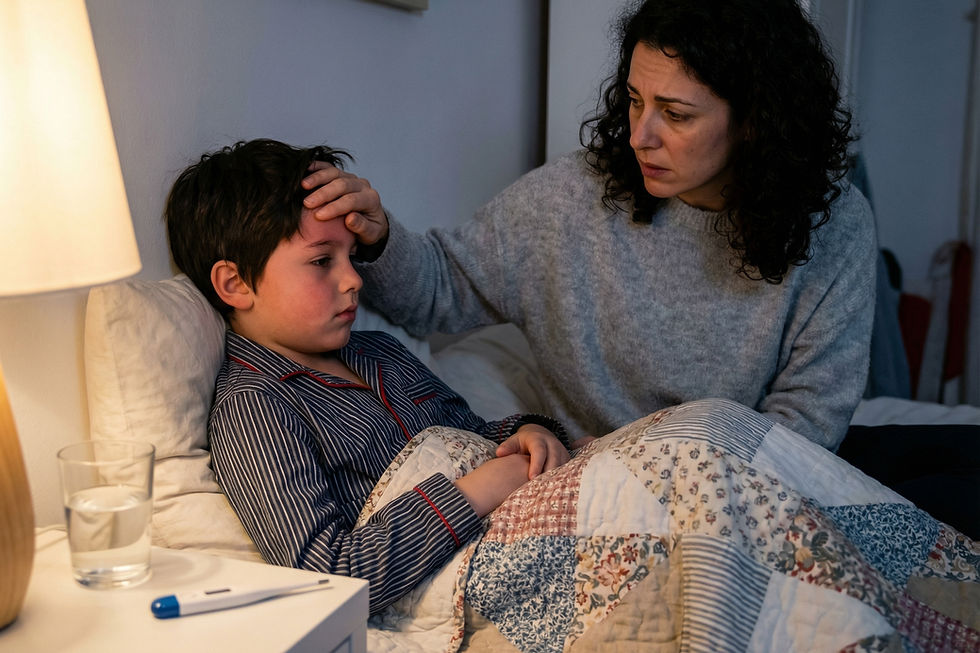
My 7-year-old son's fever has worsened more than a day after receiving an IV for Influenza B. He started having a fever on Monday evening, usually around 38.5°C, which responded well to fever reducers given about every 10 hours. He was diagnosed with Influenza B on Wednesday morning and received an IV treatment right away. His condition was good, and the fever reducers were still effective.
However, suddenly this evening, his temperature shot up past 39°C, and fever reducers are no longer working. He seems very distressed. His fever stays above 39°C regardless of medication. I'm scared it will climb higher tonight. Is it likely he has developed pneumonia? Can high fevers suddenly worsen like this even without pneumonia?
Answer:
It must be very worrying that his high fever has suddenly worsened on the third day.
【Check Your Child's Condition Now】
If any of the following apply → Go to the ER tonight
Visible retractions (skin pulling in under the ribcage) or nasal flaring while breathing
Bluish lips or nails, or wheezing/grunting sounds with breathing
Is lethargic, difficult to wake, or won't make eye contact
Has not urinated in over 8 hours or has very dry lips
Has a stiff neck or a severe headache with repeated vomiting
If none of the above are present, and your child is responsive when awake and sipping fluids → Request a same-day follow-up with your current pediatrician tomorrow morning.
【Why Fever Can Worsen After an Influenza IV】
Peramivir (the influenza IV) stops the virus from multiplying, but the inflammatory response that has already started can continue for another 1-2 days.
Influenza itself can cause high fevers for 3-5 days, and there can be times when fever reducers are less effective.
Complications like pneumonia or ear infections are usually accompanied by additional signs such as difficulty breathing, persistent ear pain, or fever lasting more than 5 days.
【What to Do at Home Now】
Give small sips of water or an electrolyte drink every 5-10 minutes → Preventing dehydration is the top priority.
Dress your child in light clothing and keep the room temperature between 20-24°C (68-75°F). Avoid heavy blankets, wet towels, or lukewarm baths.
Fever Reducers: You can alternate between Acetaminophen (e.g., Tylenol) and Ibuprofen (e.g., Advil/Motrin) every 2-3 hours, but you must respect the minimum interval for each medication (4 hours for Acetaminophen, 6 hours for Ibuprofen) and the maximum daily doses (5 times for Acetaminophen, 4 times for Ibuprofen).
Check urination frequency and color, breathing status, and responsiveness when awake every 30-60 minutes.
【When to Consult a Doctor】
Contact your current pediatrician first. Inform them that "the fever has worsened and fever reducers are less effective after the IV treatment" and ask about a same-day follow-up.
If it's after hours or a holiday, go to a local emergency room or use your insurance provider's 24-hour nurse advice line.
Pneumonia is confirmed through auscultation (listening with a stethoscope) and a chest X-ray. If there are no clear respiratory symptoms, an evaluation tomorrow morning may be sufficient.
Tonight, monitor for the warning signs listed above every 30-60 minutes. If you notice any changes, please let us know so we can adjust the plan.

For extra peace of mind and clear guidance when tracking your child's symptoms, the FeverCoach app is always there to help.