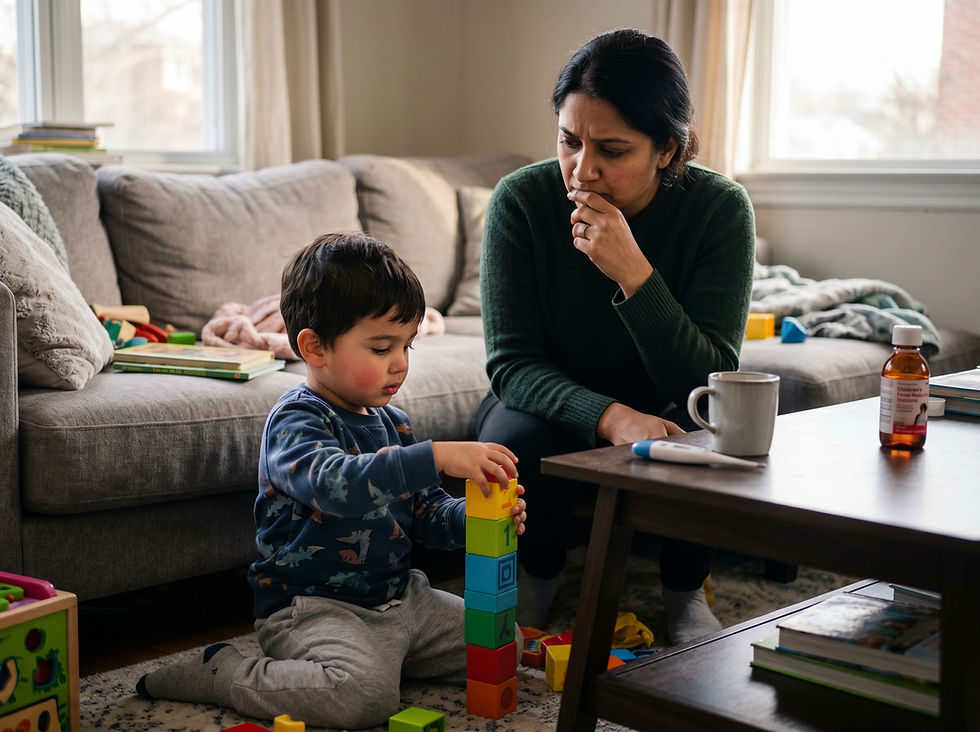
Q: My child received a flu IV treatment and the fever stopped. Can they stop wearing a mask at home?
- Myeongchan Kim, MD

- Jul 9
- 2 min read
Updated: Jul 21
Medically reviewed by Sang Hyun Ahn, MD
Content edited by Myeongchan Kim, MD
This post is a dramatization of a question and answer session experienced by our actual medical reviewers. Please note that this content is for informational purposes only and does not constitute medical advice. Always consult with a qualified healthcare professional for any health concerns or before making any decisions related to your health or treatment.

Question:
My child had fluctuating fevers for a few days, ranging from 38.1°C to 38.5°C. We initially delayed the flu test because my child's overall condition was very good. However, after the fever spiked again, we went back to the clinic, and the flu test came back positive. My child received a flu IV treatment that morning.
I was told that the flu becomes less contagious 24 hours after the last fever. Since my child hasn't had a fever since receiving the IV treatment, is it safe for them to take off their mask while at home?
Answer:
I am glad to hear that your child's fever has subsided after the IV fluid treatment.
Regarding Contagiousness:
Since your child received the antiviral IV treatment (such as Peramivir) and has remained fever-free, their contagiousness has significantly decreased. However, it is important to note that the risk of transmission has not completely disappeared just yet.
Guidelines for Wearing a Mask at Home:
As a general rule, it is highly recommended that the patient wears a mask for at least 5 days from the initial onset of symptoms. Therefore, it is safer for your child to continue wearing a mask indoors at home until a full five days have passed since their symptoms first appeared. This precaution is especially crucial if they share living spaces with high-risk individuals, such as infants, the elderly, or pregnant women.
Additional Precautions at Home:
Respiratory Etiquette: Ensure they cover their mouth and nose with a tissue or the inside of their elbow when coughing or sneezing.
Hygiene: Encourage frequent and thorough hand washing.
Household Items: Use separate towels, cups, and eating utensils for your child.
Ventilation: Open the windows frequently to air out the house.
If Symptoms Return:
While your child is currently doing well, if a fever returns or if any of their respiratory symptoms worsen, please contact your clinic or visit a pediatrician for a follow-up evaluation.

For extra peace of mind and clear guidance when tracking your child's symptoms, the FeverCoach app is always there to help.