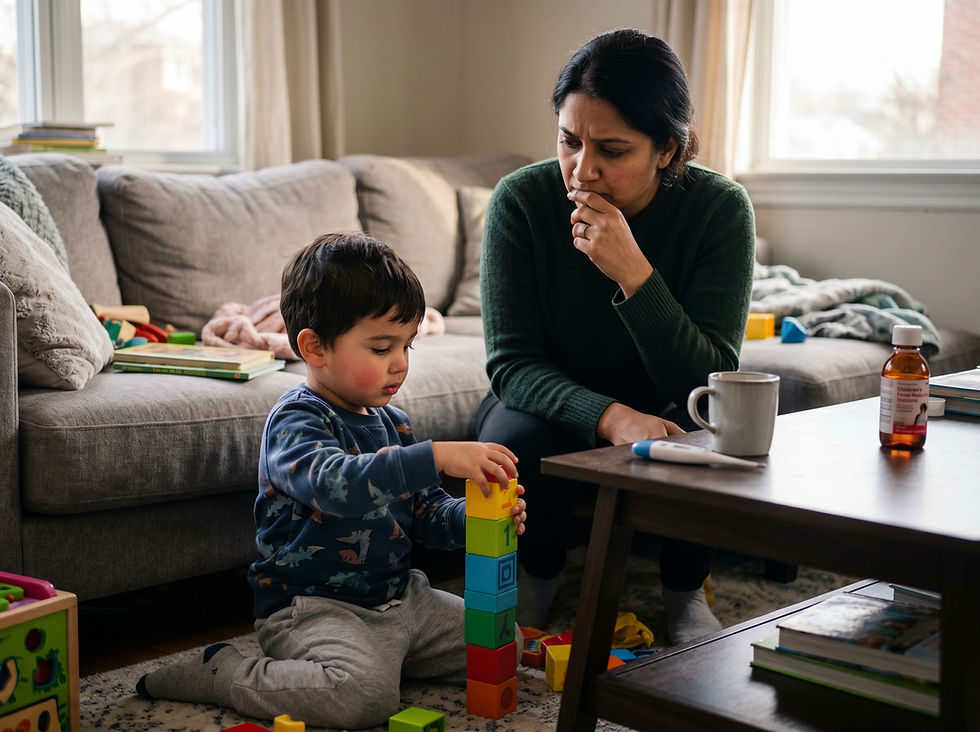
Q: My child got an IV for Influenza A today, but the fever is still high (39.4°C). When will the fever drop? I'm worried about febrile seizures.

Updated: Sep 7
Medically reviewed by Sang Hyun Ahn, MD
Content edited by Myeongchan Kim, MD
This post is a dramatization of a question and answer session experienced by our actual medical reviewers. Please note that this content is for informational purposes only and does not constitute medical advice. Always consult with a qualified healthcare professional for any health concerns or before making any decisions related to your health or treatment.

Question:
My child was diagnosed with Influenza A this morning. Around noon, they received an IV flu antiviral treatment and fever reducers at the clinic. However, after coming home, their fever spiked to 39.4°C, and two hours later it was still 38.7°C. Is there anything else I can do besides alternating fever reducers? When will the fever finally break? I am very anxious because my child has a history of febrile seizures.
Answer:
It is completely understandable to be anxious, especially on the first day of a flu diagnosis and with your child's history of febrile seizures.
Current Situation & Key Points:
Fever won't drop immediately: The IV antiviral medication your child received works by suppressing the virus's multiplication, but it does not make the fever disappear instantly.
Timeline: It typically takes 24 to 48 hours after the antiviral administration for the fever pattern to start improving.
Febrile Seizures: Even with a history of febrile seizures, fever-reducing medications cannot completely block the fever or entirely prevent a seizure from occurring.
What You Can Do at Home Tonight:
Follow Fever Reducer Guidelines:
Acetaminophen: 10–15 mg/kg every 4–6 hours.
Ibuprofen: 5–10 mg/kg every 6–8 hours.
If you are alternating (cross-dosing) the two, ensure you maintain the required intervals for each specific medication, and space the different medications 2 to 3 hours apart.
Avoid Physical Cooling: Do not use tepid water massages, ice packs, or alcohol wipes, as these can induce shivering and actually raise the body's core temperature. Instead, dress the child in light, breathable clothing and keep the room temperature comfortable (around 20–22°C or 68–72°F).
Hydration: Offer small sips of fluids (water, electrolyte drinks, or clear broth) very frequently, about every 5 to 10 minutes.
Seizure Preparation: If a seizure does occur, lay your child on their side, do not put anything in their mouth, and time the duration. If the seizure lasts longer than 5 minutes or if the child does not regain consciousness afterward, call emergency services immediately.
When to Seek Immediate Medical Attention:
Please seek an in-person medical evaluation if your child shows any of the following signs:
Difficulty breathing (e.g., chest retractions/sucking in under the ribcage, nasal flaring, wheezing).
No urination for more than 8 hours.
Extreme lethargy (e.g., unable to stay awake, lacking eye contact).
A seizure occurs (even if it lasts less than 5 minutes, an evaluation is needed).
The fever pattern shows absolutely no improvement after 48 hours.
For tonight, focus on sticking to a strict schedule for the fever reducers, maintaining hydration, and monitoring their overall condition. If you remain concerned about the persistently high fever despite today's treatment, you can call the clinic where you were treated to ask for further advice, or visit a local urgent care or emergency room if it is after hours.

For extra peace of mind and clear guidance when tracking your child's symptoms, the FeverCoach app is always there to help.