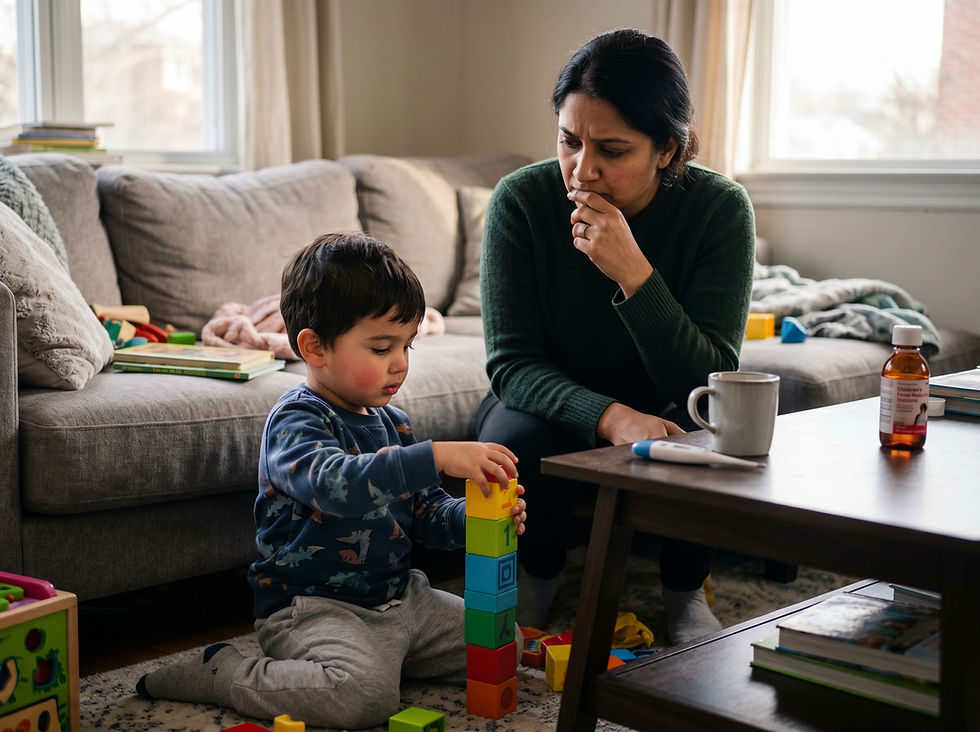
Q: My child developed a mild fever and diarrhea after recovering from Type A flu. Will a blood test be necessary?
- Myeongchan Kim, MD

- Jul 8
- 2 min read
Medically reviewed by Sang Hyun Ahn, MD
Content edited by Myeongchan Kim, MD
This post is a dramatization of a question and answer session experienced by our actual medical reviewers. Please note that this content is for informational purposes only and does not constitute medical advice. Always consult with a qualified healthcare professional for any health concerns or before making any decisions related to your health or treatment.

Question:
Hello doctor. My child is experiencing a mild fever after recovering from the flu. The fever from the Type A flu stopped on Sunday afternoon. There was no fever for over 24 hours, and their temperature remained normal through Tuesday. However, today a mild fever (37.4–37.5°C) suddenly appeared. My child still has a runny nose and a cough, so they have been taking cold medicine continuously since the initial flu diagnosis. Today, they also had diarrhea twice, with one instance of soiling. We plan to visit the clinic tomorrow, but I was wondering if a blood test will be necessary?
Answer:
Hello! It is completely understandable to be concerned when a mild fever returns during the recovery phase of the flu.
Here are a few possible reasons for this pattern after a flu infection:
• Secondary bacterial infection (such as otitis media/middle ear infection or pneumonia)
• The natural recovery process of the flu itself
• A co-infection with another virus
• Side effects from flu antiviral medications like Tamiflu (which commonly cause diarrhea)
Regarding your child's current situation:
→ A temperature of 37.4–37.5°C is a mild fever, but any recurring fever after the flu requires careful monitoring.
→ The diarrhea could be a symptom of the flu recovery phase or a medication side effect.
→ Persistent coughing and a runny nose can be part of the normal recovery process, but it is important to verify that these symptoms are not worsening.
When you visit the clinic tomorrow, the doctor will likely perform the following assessments:
Auscultation (listening to the chest) to check for signs of pneumonia.
An ear examination to check for otitis media.
An evaluation of your child's hydration status.
Regarding the blood test, this will be at the doctor's discretion based on the physical exam. If needed, they may check inflammatory markers (CRP) and white blood cell counts to rule out a secondary bacterial infection.
⚠️ Please go to the emergency room tonight if you observe any of the following warning signs:
• A fever of 38.5°C or higher
• Difficulty breathing or chest pain
• Signs of severe dehydration (e.g., no urination for more than 8 hours, no tears when crying)
• Decreased consciousness, extreme lethargy, or unresponsiveness
For now, encourage frequent fluid intake. If the diarrhea continues, electrolyte beverages can be very helpful. Please make sure to describe all of these symptom changes to your doctor during tomorrow's in-person evaluation so they can provide the most accurate assessment and treatment plan.

For extra peace of mind and clear guidance when tracking your child's symptoms, the FeverCoach app is always there to help.