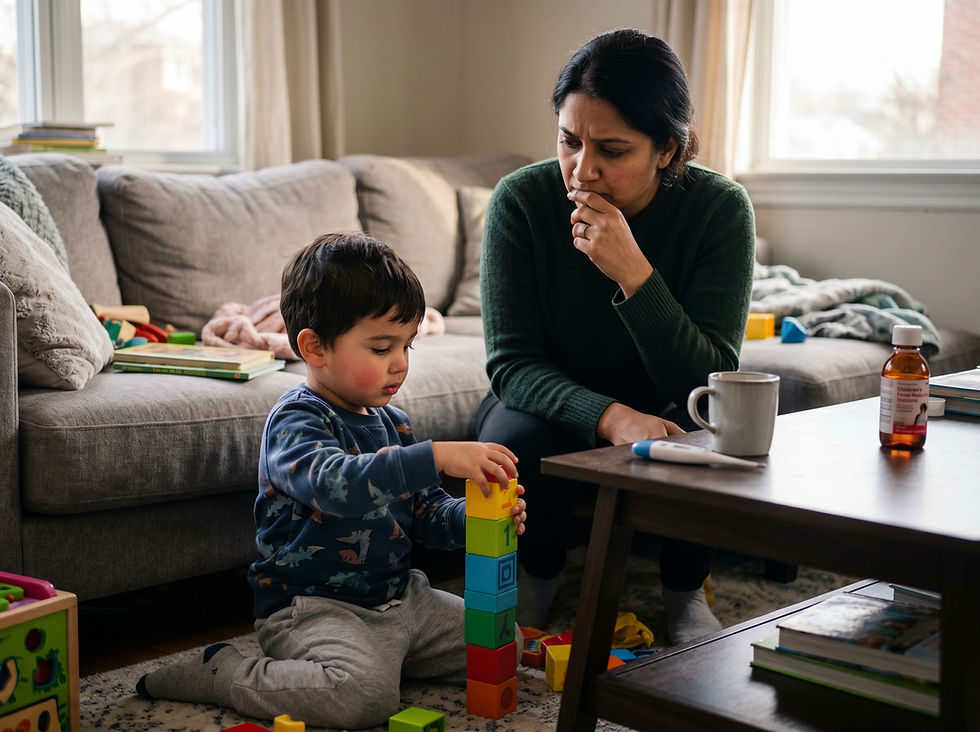
Q: My 4-year-old has Influenza A, fever, and severe chills. Should I keep them warm or cool?
- Myeongchan Kim, MD

- Jul 6
- 2 min read
Updated: Jul 8
Medically reviewed by Sang Hyun Ahn, MD
Content edited by Myeongchan Kim, MD
This post is a dramatization of a question and answer session experienced by our actual medical reviewers. Please note that this content is for informational purposes only and does not constitute medical advice. Always consult with a qualified healthcare professional for any health concerns or before making any decisions related to your health or treatment.

Question:
My 4-year-old child was recently diagnosed with Influenza A. They are complaining of a stomachache, crying, and vomiting with a lot of phlegm. When I give them the prescribed medication, their fever drops to 38°C, but their hands and feet get very cold. My child complains of feeling freezing, so I covered them with a blanket and let them sleep warmly. This is the first time they have experienced chills, so I am not sure if I am doing the right thing. I called a clinic, and they said that since there is a fever, I should keep the child cool regardless. I feel bad forcing my child to be cool when they are shivering with ice-cold hands and feet. What is the correct way to handle this?
Answer:
It sounds like your 4-year-old is having a tough time with Influenza A. It is completely understandable to feel confused about managing chills and fever, but I will guide you on the correct approach.
Current Situation Assessment:
The combination of Influenza A, stomachache, vomiting, phlegm, and chills are classic flu symptoms. Having cold hands and feet and complaining of feeling cold is a completely normal physiological reaction during the phase when a fever is actively rising.
Immediate Steps to Take:
When the child feels cold: Cover them with a single, light blanket. (Do not use multiple or thick heavy blankets).
When their hands and feet become warm and the fever peaks: Remove the blanket and keep the child cool and lightly clothed.
Room temperature: Maintain a comfortable room temperature of around 24-26°C (75-79°F).
Hydration is key: Offer frequent, small sips of warm water or electrolyte beverages to prevent dehydration.
Important Precautions:
Chills (Fever is rising): Providing a light blanket for warmth and comfort is perfectly fine.
High Fever (Whole body is hot): Keep the child cool.
Do NOT use: Multiple thick blankets, electric heating pads, or cold water baths.
⚠️ Seek immediate Emergency Medical Care if you notice:
Difficulty breathing or chest pain.
Confusion, excessive drowsiness, or altered consciousness.
Signs of severe dehydration (no tears, dry mouth, no urine for hours).
Continuous vomiting that prevents the child from keeping their medication or fluids down.
Rather than unconditionally keeping the child cool as previously advised over the phone, it is correct to adjust your approach based on your child's current physiological state. Provide light warmth when they are experiencing chills, and keep them cool once the shivering stops and their body feels uniformly hot. Please monitor your child's symptoms closely and seek an in-person medical evaluation if they worsen or if you observe any of the warning signs listed above.

For extra peace of mind and clear guidance when tracking your child's symptoms, the FeverCoach app is always there to help.