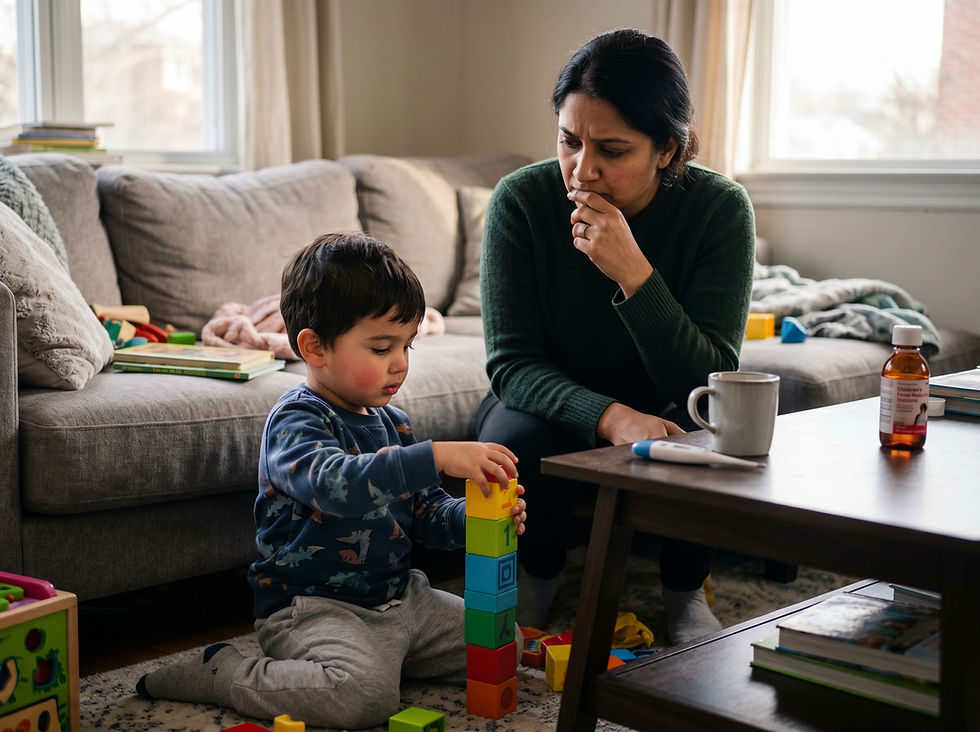
Q: Can a flu fever return after a few days? My child had IV treatment but spiked a fever again.

Updated: Sep 7
Medically reviewed by Sang Hyun Ahn, MD
Content edited by Myeongchan Kim, MD
This post is a dramatization of a question and answer session experienced by our actual medical reviewers. Please note that this content is for informational purposes only and does not constitute medical advice. Always consult with a qualified healthcare professional for any health concerns or before making any decisions related to your health or treatment.

Question:
My 9-year-old child (34kg) developed a fever early Monday morning and received an IV flu treatment (Peramivir) at a clinic that same morning. The fever continued until Tuesday morning, but after taking fever reducers, it subsided, and I thought it was over. However, around 4 AM on Thursday, my child suddenly felt hot, and their temperature was 38.7°C. After taking a fever reducer, it immediately dropped to 36.5°C, and they are currently maintaining a normal body temperature.
Can a flu fever return like this after some time has passed? There is no cough or other symptoms, but I can hear some phlegm sounds. Could this be pneumonia? I know going to a doctor is the right answer, but we are currently abroad, which makes it difficult, so I am asking for advice out of frustration.
Answer:
You must be very worried that the fever has returned after the initial flu treatment, especially while traveling abroad.
Current Situation Summary:
• Flu IV treatment started on Monday.
• Fever lasted until Tuesday morning, then subsided.
• Rebound fever of 38.7°C occurred early Thursday morning.
• Rapid drop to a normal temperature (36.5°C) after a fever reducer.
• No cough, but phlegm sounds are present.
Possibility of Rebound Fever During Flu:
It is quite possible for a fever to continue for 2-3 days even after administering antiviral medication, and in some cases, the fever can return after an initial period of improvement. The main causes include:
The virus itself: An ongoing immune response occurring before the flu virus is completely cleared from the body.
Secondary bacterial infection: Complications such as pneumonia, otitis media (ear infection), or sinusitis.
Co-infection: Catching another respiratory virus at the same time.
Checking for Pneumonia:
If any of the following apply, you need an evaluation by a local medical facility today:
• Rapid breathing (over 30 breaths per minute for a 9-year-old).
• Chest retractions (skin sinking in under the ribs) or nasal flaring while breathing.
• Bluish lips or nails.
• Wheezing or grunting sounds when breathing, combined with looking exhausted.
• Complaining of chest or abdominal pain.
• Continuous lethargy or a complete refusal of water and food.
• Fever persisting for over 24 hours without fever reducers, or fever repeating for more than 5 days.
What to Do at Home Now:
✅ Record Observations:
• Measure temperature every 4-6 hours (check if it stays normal without medication).
• Count the respiratory rate for 1 full minute (this is most accurate while the child is sleeping).
• Monitor fluid intake and urination frequency (no urine for over 8 hours indicates dehydration).
• Monitor activity level (check if they are playing and eating as usual).
✅ Symptom Relief:
• Provide plenty of fluids (water, warm broth, electrolyte drinks).
• Help clear phlegm: offer warm drinks and use humidification (40-60% humidity) if possible.
• Keep the child in a comfortable resting position (slightly elevate the upper body).
• Use fever reducers only when the child is uncomfortable (Acetaminophen 10-15 mg/kg or Ibuprofen 5-10 mg/kg per dose).
When to Visit a Local Medical Facility:
🟠 Visit Today if:
• Any of the suspected pneumonia symptoms listed above appear.
• The effect of the fever reducer lasts less than 4 hours.
• The fever is accompanied by ear pain, a swollen throat, or a severe headache.
• The fever persists for more than 5 days (counting from Monday).
🟡 Observe for 1-2 Days if:
• Body temperature remains normal after the fever reducer wears off.
• Breathing is comfortable, and activity levels are good.
• Fluid intake is adequate.
• There are only mild phlegm sounds without any difficulty breathing.
Tips While Staying Abroad:
• If you buy medication locally, check the concentration of the fever reducers at the pharmacy and recalculate the dosage based on your child's weight (34kg).
• Ask your hotel or accommodation front desk for the location of the "nearest urgent care clinic" or "pediatric emergency room" just in case.
• Utilize your travel insurance's 24-hour medical consultation line if you have one.
• If symptoms worsen, do not hesitate to use local emergency numbers (e.g., 911 in the US, 112 in Europe).
Please continue to monitor the observation points closely today. If you notice any concerning changes in your child's breathing or activity levels, or if you are uncertain about their condition, please seek an in-person evaluation at a local medical facility immediately to ensure your child's safety.

For extra peace of mind and clear guidance when tracking your child's symptoms, the FeverCoach app is always there to help.