
"Is It Just My Baby?" A Doctor Dad’s Guide to Night Wakings

Updated: Sep 28
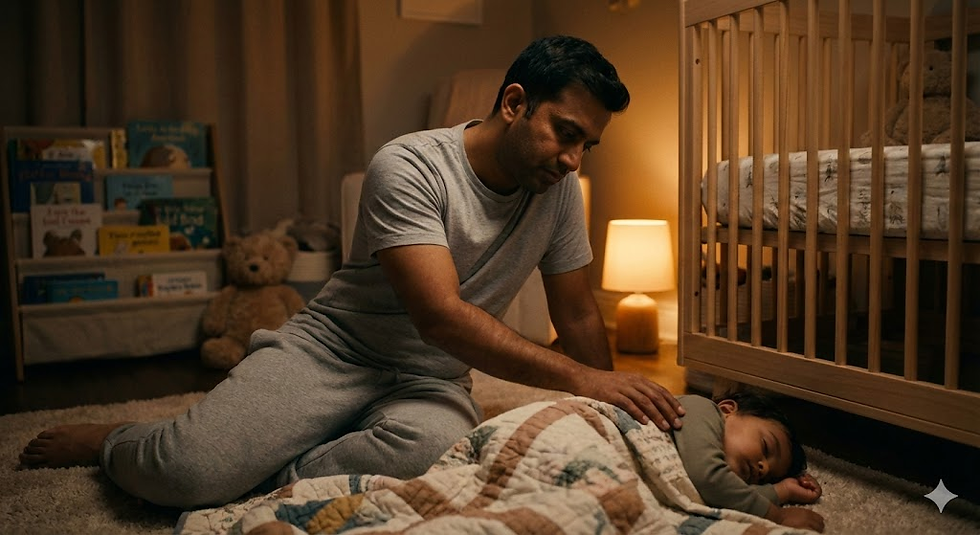
It’s 2:00 AM and the house is silent, except for your crying baby. As you drag yourself out of bed, you might wonder if you are doing something wrong.
Rest assured, you are not alone. Night wakings affect 25–50% of babies aged 9 to 12 months. As a doctor and a dad, I want to explain why this happens and how to fix it.
The Real Problem: Sleep Association
If your baby is healthy and fed, they likely aren't waking up because of hunger. The culprit is usually "Sleep Association."
Think of sleep like a train journey. We all cycle between deep and light sleep, naturally waking up 4 to 6 times a night. Adults simply roll over and go back to sleep. However, babies who rely on being held or fed to fall asleep panic when they wake up alone. They cry because the "conditions" for sleep have changed, a condition known as Sleep-Onset Association Insomnia.
While physical issues like teething or illness can cause temporary disruptions, if your baby is happy during the day but demanding at night, it is likely a sleep habit issue rather than pain.
The Action Plan
To help everyone sleep through the night, you need to normalize the sleep environment.
Create a Consistent Routine A predictable routine signals to your baby’s brain that it is time to wind down. Follow a simple formula: Bath, lotion, book, then lights out. Keep this routine to about 20–30 minutes and aim for a bedtime between 7:00 PM and 8:00 PM.
Teach Independent Sleep (The Critical Step) The environment your baby falls asleep in must match the environment they wake up in at 2 AM. The goal is to put them down drowsy but awake. If you rock them completely to sleep, they will expect that same rocking when they wake up in the middle of the night. Gradually reduce your assistance over several days until they can settle themselves.
When to Call the Doctor
While most sleep issues are behavioral, watch for these "Red Flags" that require immediate medical attention:
Sleep Apnea: Loud snoring or gasping for air.
High Fever: Fevers over 104°F (40°C).
Physical Signs: Drenching night sweats or poor weight gain.
Dealing with night wakings is exhausting, but it is a solvable problem. It’s not your fault, and it’s not your baby’s fault. With a little consistency, you can teach your child the skills they need to sleep soundly.
Written by Dr. Sam Ahn, MD (Family Medicine Specialist, Medical Algorithm Director of MoDoc AI) | 2026-02-21
-------------------
Dr. Sam Ahn is a board-certified family medicine physician and medical advisor for MoDoc AI's FeverCoach. This article is for educational purposes and does not replace professional medical advice.