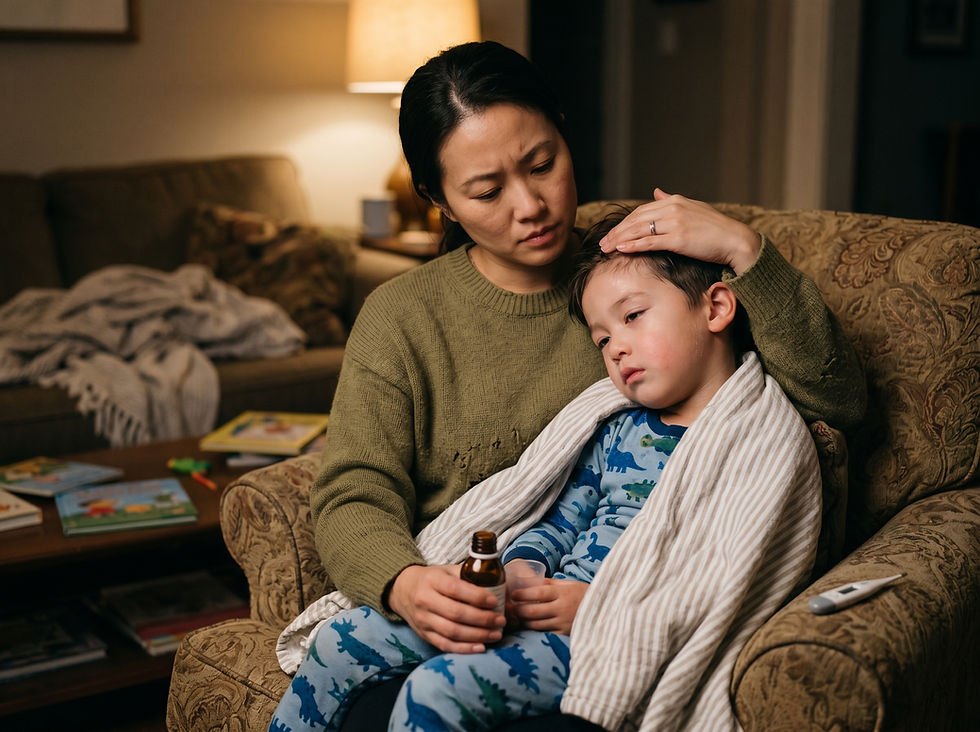
Q: Is it normal for a 53-month-old child to have severe headaches and mild chest pain after DTaP and flu vaccines?

Medically reviewed by Sang Hyun Ahn, MD
Content edited by Myeongchan Kim, MD
This post is a dramatization of a question and answer session experienced by our actual medical reviewers. Please note that this content is for informational purposes only and does not constitute medical advice. Always consult with a qualified healthcare professional for any health concerns or before making any decisions related to your health or treatment.
Question:
My 53-month-old child, weighing 17 kg, received both the DTaP and flu vaccines at 5 PM a couple of days ago. The next morning at 6 AM, they developed a fever of 38.7°C and felt unwell, though their overall condition was okay. I gave them acetaminophen around 11 AM, and the fever has since dropped to a mild 37.7°C.

However, they are complaining of a headache whenever they move or hear loud noises, tightly holding their head. They also pointed to their left chest today and said it hurt. The following morning, they woke up complaining of a severe headache again, so I gave them another dose of acetaminophen for pain relief. Is it common for children to experience such headaches after vaccinations?
Answer:
It is completely understandable to be worried about your child's reactions after vaccination. Fever and headaches are actually quite common after receiving the DTaP and flu vaccines simultaneously.
Current Situation Evaluation:
Fever onset: A fever starting 13 to 14 hours after vaccination is a normal immune response.
Temperature drop: The decrease from 38.7°C to 37.7°C is a sign of good progress.
Headache: This is a known side effect following these vaccinations.
Regarding the Headache:
Headaches are experienced by about 10% to 30% of children, especially after the DTaP vaccine. It is a temporary symptom caused by the body's immune response and usually improves on its own within 2 to 3 days.
What You Can Do Right Now:
Use Acetaminophen: Giving acetaminophen for pain relief was the correct choice. For a 17 kg child, the general recommended dose is about 170–255 mg per dose. If you are using a standard 32 mg/ml children's syrup, this translates to roughly 5.3 to 8 ml (6.5 ml is a good target). You can give this every 4 to 6 hours, up to a maximum of 5 times a day.
Resting environment: Provide a quiet, dark room to help ease sensory discomfort.
Hydration: Ensure your child drinks plenty of fluids.
Comfort: A very gentle head massage may help soothe the pain.
When to Visit a Doctor:
Please seek immediate medical evaluation if your child experiences any of the following:
The headache progressively worsens or lasts for more than 3 days.
Vomiting occurs.
They develop a stiff neck.
They seem unusually drowsy, confused, or have altered consciousness.
Chest pain repeats, worsens, or is accompanied by difficulty breathing.
The mild chest pain your child mentioned could potentially be referred pain from muscle soreness at the injection site. However, if the chest pain persists or repeats, it is important to have your pediatrician examine them in person to rule out any other issues. Most post-vaccination symptoms resolve safely within 48 to 72 hours, so continue to monitor your child's condition closely while keeping them comfortable.

For extra peace of mind and clear guidance when tracking your child's symptoms, the FeverCoach app is always there to help.