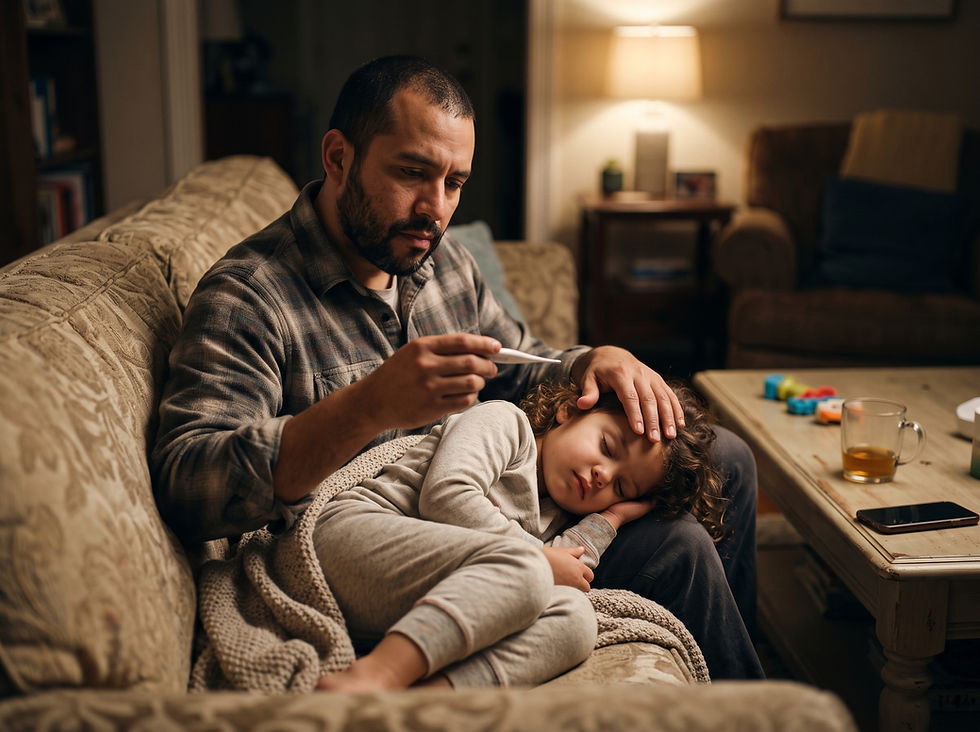
Q: My child's temperature dropped from 40.5°C to 37.3–37.6°C after 5 days. Does this mean the fever has broken?

Medically reviewed by Sang Hyun Ahn, MD
Content edited by Myeongchan Kim, MD
This post is a dramatization of a question and answer session experienced by our actual medical reviewers. Please note that this content is for informational purposes only and does not constitute medical advice. Always consult with a qualified healthcare professional for any health concerns or before making any decisions related to your health or treatment.
Question:
My child has had a fever since Wednesday, reaching as high as 40.5°C. Yesterday, after getting IV fluids, the high fever came down, but today the temperature has been lingering between 37.3°C and 37.6°C all day. Can this low-grade temperature be considered "fever broken"? It is now the 5th day and we still do not know the exact cause. I am worried because the temperature has not fully returned to baseline. Is this a sign of recovery?

Answer:
It is completely understandable to feel concerned, especially after witnessing a fever as high as 40.5°C over several days.
Is a low-grade fever considered "fever broken"?
Yes, it indicates partial improvement: A drop from 40.5°C down to 37.3–37.6°C is a clear sign that the body is gaining control over the infection.
However, it has not fully resolved: A normal resting body temperature typically ranges between 36.5°C and 37.2°C. A reading between 37.3°C and 37.6°C sits at the upper end of normal to a mild low-grade elevation. Because the fever has lasted for 5 days, this prolonged course warrants careful attention.
Key signs to monitor closely right now:
Activity and demeanor: Is your child responsive, playing, and acting like themselves?
Hydration: Are they drinking enough fluids? A lack of wet diapers or urination for 8 hours or more is a warning sign of dehydration.
Breathing: Is their breathing calm and regular, or is it rapid, labored, or accompanied by chest retractions (skin sucking in under the ribs)?
New symptoms: Look out for new rashes, neck stiffness, persistent vomiting, or severe lethargy.
When to seek an in-person medical evaluation:
Take your child to a pediatrician or urgent care center today if:
The temperature climbs back up to 38.5°C or higher, or low-grade temperatures persist beyond another 24 hours.
Your child appears excessively lethargic, weak, or refuses to drink fluids.
There is no urination for 8 hours or longer.
Breathing becomes fast or labored.
New symptoms develop, such as an unexplained rash, persistent vomiting, or neck pain.
Home care guidance:
Encourage fluids: Offer small, frequent sips of water, oral rehydration solutions, breast milk, formula, or clear broths.
Prioritize comfort: Dress your child in light, breathable clothing and maintain a comfortable room temperature.
Use fever medications thoughtfully: Antipyretics (like acetaminophen or ibuprofen) should be used primarily to relieve discomfort rather than to target a specific number on the thermometer.
Keep a log: Track temperatures, fluid intake, urination frequency, and general activity levels to share with your doctor.
Because any fever lasting 5 days requires clinical oversight, consult your pediatrician to discuss whether further diagnostic testing—such as blood work, a urine analysis, or a chest X-ray—is necessary to identify the underlying cause.

For extra peace of mind and clear guidance when tracking your child's symptoms, the FeverCoach app is always there to help.