Winter Dry Skin in Babies and Toddlers: Bathing and Moisturizing Tips

To prevent or soothe winter dry skin, keep your baby’s or toddler’s baths under 10 minutes, use lukewarm water and a gentle fragrance-free cleanser, and apply moisturizer while the skin is still damp. Moisturize daily, including on days without a bath. Persistent itchy, inflamed patches may be eczema and deserve a clinician’s advice.
Cold outdoor air and indoor heating can leave skin feeling dry. A simple, consistent routine usually helps ordinary dryness. If skin becomes painful, develops signs of infection, or keeps your child awake, arrange medical care.
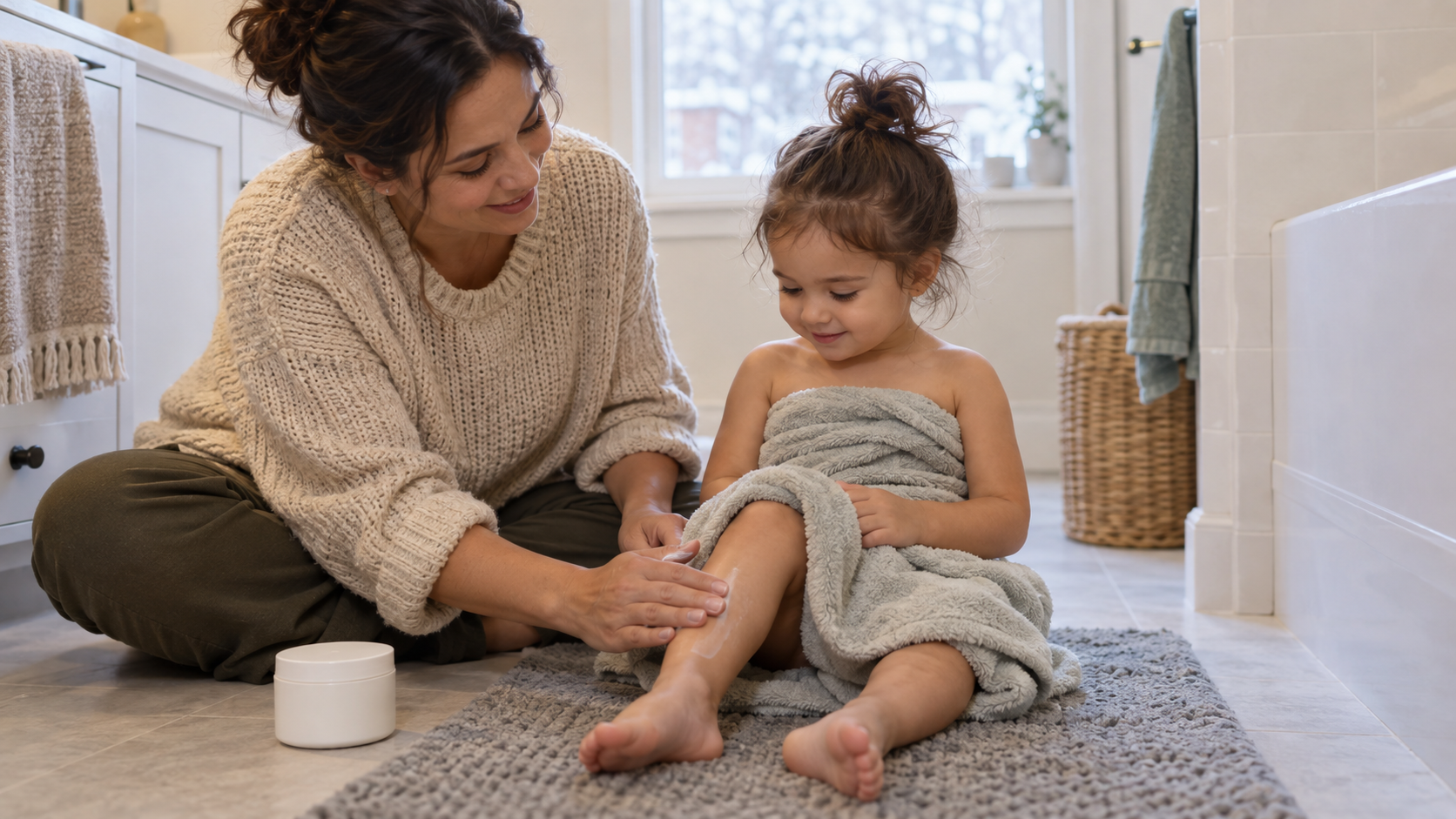
Keep baths short and gentle
A bath should feel comfortably lukewarm, not hot. Hot water and prolonged soaking can make dryness worse. The American Academy of Pediatrics recommends baths lasting less than 10 minutes in its winter skin-care guidance for babies and toddlers.
Try this routine:
Have a towel and moisturizer ready before starting, so you can finish without leaving your child unattended.
Use a gentle fragrance-free cleanser where cleaning is needed. Avoid bubble baths, scented soaps, and vigorous scrubbing.
Stay within arm’s reach throughout the bath. Never leave a baby or toddler alone in water, even briefly.
Pat the skin gently with a soft towel. Leave it slightly damp rather than rubbing it completely dry.
There is no need to add extra baths to treat dryness. Whatever bathing schedule fits your child, keep baths brief and follow each one with moisturizer.
Apply moisturizer while skin is damp
Spread moisturizer over the skin right after patting it dry. This helps hold moisture in the skin. Pay attention to dry areas such as the cheeks, arms, and legs, while keeping products out of the eyes and mouth.
Choose a fragrance-free cream or ointment. These are generally better choices for very dry skin than a thin lotion. Plain petroleum jelly is an ointment option. “Unscented” does not always mean fragrance-free, so check the label.
Apply moisturizer at least daily and again when dry areas need it. After handwashing, pat hands dry and moisturize if they are getting rough or cracked. You do not need to bathe your child again before reapplying moisturizer.
If a new product causes burning, increased redness, or a rash, stop using it. Ask your child’s clinician about a suitable alternative if irritation persists.
Make the rest of the routine comfortable
Skin care continues between baths. Soft clothing can reduce rubbing; if wool irritates your child, keep a soft layer between it and the skin. Change out of damp clothing and avoid bundling your child so heavily that they become sweaty.
Keep fingernails short to limit damage from scratching. Moisturize rough spots rather than scrubbing away flakes. Avoid fragranced products on irritated skin, and introduce new skin-care products one at a time so a reaction is easier to recognize.
Is it ordinary dryness or eczema?
Ordinary dryness may look flaky or feel rough, with mild itching that improves as the routine becomes consistent. Eczema often causes recurring, itchy, inflamed patches. Depending on skin tone, affected areas may look red, purple, darker brown, or otherwise different from nearby skin.
Appearance alone cannot confirm eczema. Ask your child’s clinician if patches persist, repeatedly return, crack, or interfere with sleep. Moisturizer supports skin care, but an inflamed eczema flare may also need prescribed treatment.
The AAP’s guidance on eczema care recommends brief lukewarm baths, gentle fragrance-free cleansing, and daily moisturizer. If your child has a prescribed topical medicine, apply it before moisturizer and follow the clinician’s directions. Check before starting medicated creams on a baby or toddler, especially on the face or diaper area.
When to call or seek urgent care
Contact your child’s clinician for persistent itching, worsening patches, bleeding cracks, or skin symptoms that disrupt sleep despite regular moisturizing.
Seek same-day medical care for spreading redness or discoloration, increasing warmth, swelling, pain, pus, yellow crusts, or oozing—especially with fever. Widespread blistering or peeling, or a child who seems very ill, also needs urgent evaluation. For a baby younger than 3 months, a temperature of 100.4°F (38°C) or higher requires prompt medical evaluation, even if the skin problem seems minor.
Call 911 for trouble breathing or swelling of the lips or tongue after using a product.
This article provides general education and does not replace advice from your child’s clinician.
By Sang Hyun Ahn, MD