
Winter Car Seat Safety: Coats, Layers, and a Snug Harness

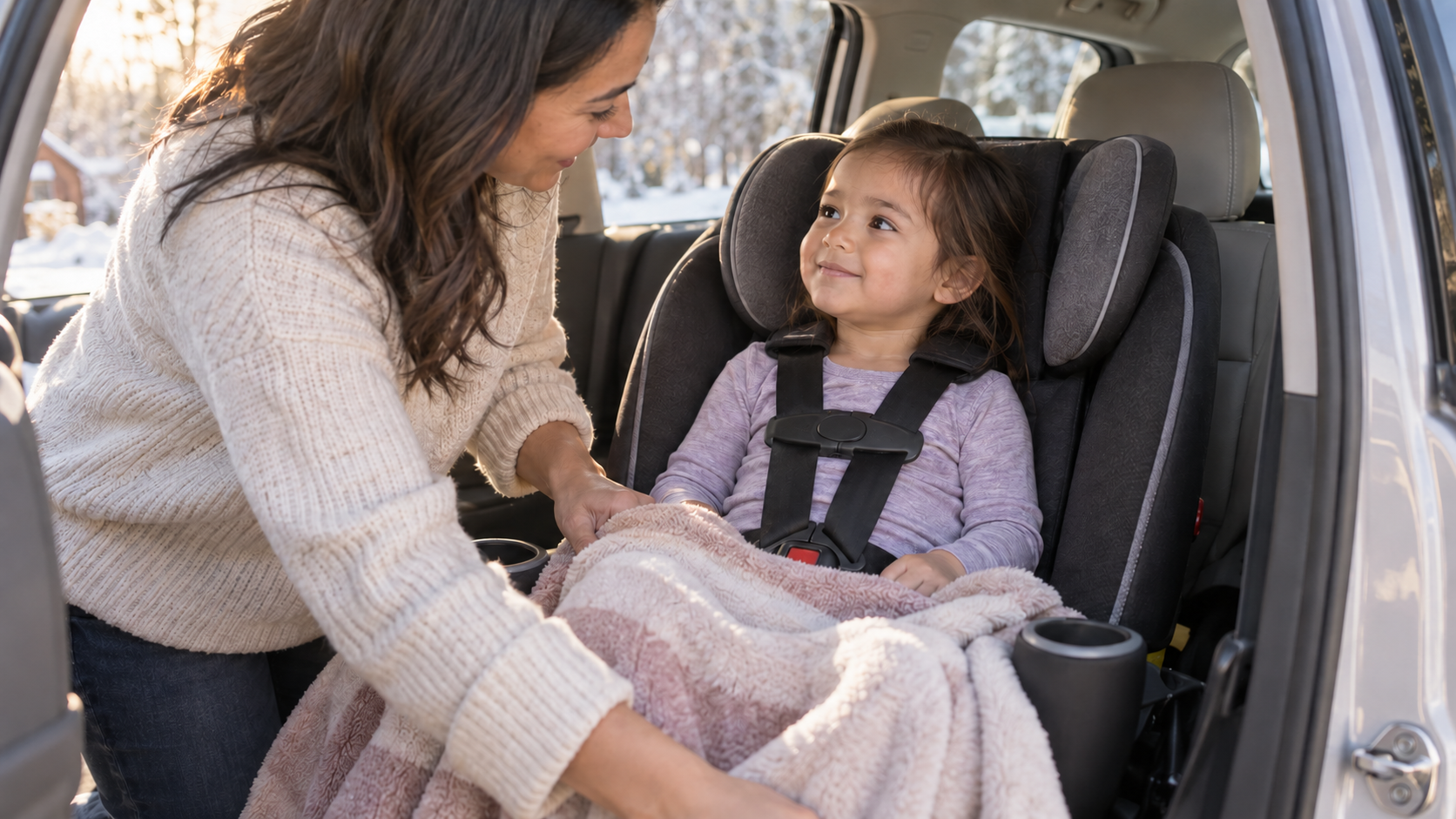
Take off a bulky winter coat or snowsuit before buckling your child into a car seat. Dress your child in thin, fitted layers, secure the harness snugly, then put a blanket or coat over the buckled straps. Keep the face uncovered. This lets you add warmth without putting compressible padding between your child and the harness.
Why bulky coats affect harness fit
A puffy coat can make the harness look tight even when it leaves extra space around your child's body. In a crash, the coat's padding can compress, leaving slack that allows more movement inside the seat.
The American Academy of Pediatrics and the National Highway Traffic Safety Administration recommend avoiding bulky clothing under the harness. Lightweight layers, including thin fleece, are a better starting point. Judge clothing by its thickness and the resulting harness fit; a garment's name or a “car-seat friendly” marketing claim does not establish that it is suitable.
Your car-seat manual remains the guide for installation, harness settings, and permitted accessories.
A winter buckling checklist
Prepare before going outside. Choose fitted clothing and lightweight layers. Bring a blanket and keep the winter coat available for the walk between the car and your destination. Allow extra time so you can buckle carefully.
Remove bulky outerwear in the car. Take off puffy coats, snowsuits, or other thick layers before placing your child in the seat. Do not put a blanket beneath the child or behind their back.
Position and buckle your child. Seat your child with their back and bottom against the seat, and arrange the harness according to the manual. Check that the straps lie flat without twists.
Tighten the harness. Remove slack and check the fit at the shoulder. You should not be able to pinch a fold of harness webbing between your fingers. Position the chest clip at armpit level.
Add warmth over the harness. Lay a blanket over the secured straps, or place the coat backward over them, with the child's arms in the sleeves. Leave the face uncovered and make sure you can reach the buckle.
Adjust warmth as the car heats up. Remove the blanket or outer coat if your child becomes hot or sweaty. Stop somewhere safe before making adjustments that require your attention.
A blanket used for warmth belongs outside the secured harness; it should never replace a snug fit.
Check the seat's settings, too
For a rear-facing seat, harness straps generally come through slots at or below the shoulders. For a forward-facing seat, they generally come through slots at or above the shoulders. Follow your seat's manual for its exact settings and fit requirements.
Keep using the appropriate seat and direction until your child reaches the manufacturer's height or weight limits. Winter clothing is not a reason to move a child to the next seat stage early.
Recheck harness fit on each trip. Yesterday's adjustment may not fit today's clothing. If clothing prevents a snug fit, remove or replace that layer before driving.
Extra considerations for babies and short trips
Babies need warmth, but thick padding still does not belong under their harness. Use fitted layers and add a blanket after buckling. Keep blankets away from the nose and mouth, and check for overheating as the cabin warms.
Use only accessories permitted by the car-seat manufacturer. Avoid adding liners, body inserts, or covers that put material beneath your child or between the child and harness unless the manufacturer specifically allows them for that seat.
The same clothing and harness rules apply to a quick trip around the block. Once you arrive, put the coat back on before taking your child outside.
If you warm the vehicle beforehand, never run the engine in a garage or other enclosed space. Never leave your child alone in the vehicle.
When to stop or get help
If you notice loose straps or bulky clothing under the harness while driving, pull over safely and correct the fit before continuing. Do not unbuckle your child while the car is moving.
If your child remains unusually cold, keeps shivering, or seems unwell after moving into a warm place, contact their pediatrician promptly for guidance. Call 911 if your child is difficult to wake, has trouble breathing, or is unresponsive. After a crash, call 911 for a serious injury or breathing problem.
Sources
This article provides general education and does not replace your car-seat instructions or individual medical advice.
By Sang Hyun Ahn, MD