Thanksgiving Food Safety: Turkey and Leftovers for Kids

Refrigerate perishable Thanksgiving foods within 2 hours, or 1 hour if the surrounding temperature is above 90°F (32°C), unless they are being kept safely hot or cold. Keep the refrigerator at 40°F (4°C) or below, and eat refrigerated cooked turkey and dishes containing it within 3–4 days after cooking. These rules apply to the whole family; children younger than 5 are especially vulnerable to foodborne illness.
The CDC's holiday turkey guide explains these storage limits. Plan refrigerator space before the meal so cleanup does not have to wait until guests leave.
Thaw the turkey safely
The refrigerator is a practical option when you can plan ahead. Leave the turkey in its wrapping, place it in a tray to catch juices, and keep it on a low shelf away from ready-to-eat foods. Allow about 24 hours for every 4–5 pounds. A refrigerator-thawed turkey can stay refrigerated for another 1–2 days before cooking.
For a faster method, submerge the turkey in cold tap water inside a leakproof bag. Change the water every 30 minutes, allow about 30 minutes per pound, and cook immediately after thawing. If you use a microwave, follow its instructions and cook the turkey immediately afterward.
Do not thaw turkey on the counter or in hot water. The outside can become warm enough for bacteria to grow while the center is still frozen.
Keep raw poultry away from cooked food
The American Academy of Pediatrics' holiday food safety advice emphasizes separating raw and cooked foods.
Do not wash raw turkey. Splashing water can spread germs to the sink, counters, and nearby food.
Wash hands with soap and water for at least 20 seconds before preparing food and after touching raw poultry.
Use separate cutting boards and utensils for raw poultry and ready-to-eat foods. Wash and sanitize surfaces after raw poultry touches them.
Put cooked turkey on a clean platter, never the unwashed platter that held it raw.
Keep children away from raw meat, its packaging, and preparation surfaces.
Check doneness with a thermometer
Cook turkey to 165°F (74°C). Check the thickest part of the breast and the innermost thigh and wing, avoiding bone. Color and clear juices cannot reliably show that turkey is safe.
Cooking stuffing in a separate dish makes its temperature easier to manage. Stuffing must also reach 165°F, including stuffing cooked inside the bird. Do not serve it while waiting for it to finish cooking.
Store leftovers before the time limit
Keep hot food at 140°F (60°C) or above and cold food at 40°F or below. Food sitting on an ordinary buffet or dining table needs to go into the refrigerator within the 2-hour limit, or 1 hour above 90°F. Count time spent during serving and transport together; putting food away briefly does not reset the clock.
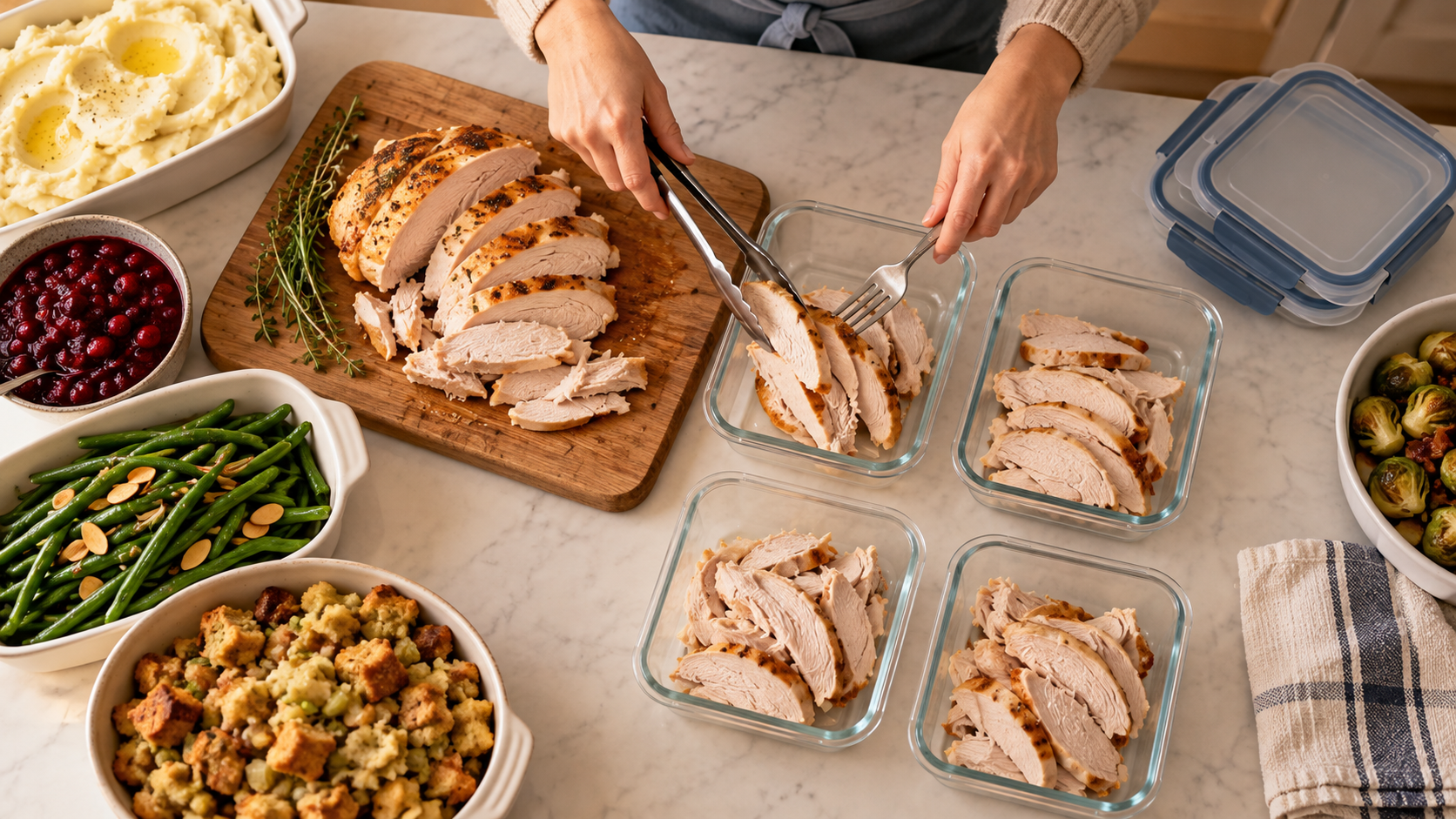
Carve leftover turkey into smaller portions and divide side dishes into shallow containers.
Refrigerate promptly. Do not leave food on the counter to cool completely first.
Label containers with the cooking date. Eat refrigerated turkey and turkey dishes within 3–4 days, or freeze them within that period.
Reheat leftovers to 165°F throughout, checking several spots when microwaving. Stir or rotate food to reduce cold spots.
Discard perishable food left out beyond the limit. Reheating cannot reliably make it safe, and smell or taste cannot tell you whether it is safe.
Put out small serving portions and replenish them as needed. Set aside children's portions before serving so they can cool to a comfortable eating temperature without delaying storage of the rest.
Make young children's plates safer
Remove bones and tough skin, and offer moist, finely shredded or appropriately cut turkey. Match texture and piece size to your child's eating skills. Have children sit upright and supervise eating; avoid eating while walking or playing.
For children younger than 4, avoid whole nuts, popcorn, and other hard or round choking hazards. Quarter grapes lengthwise if serving them. Ask about ingredients in stuffing, gravy, and desserts when a child has a food allergy, and use separate utensils to prevent allergen cross-contact.
When to get medical help
Contact your child's clinician promptly for bloody diarrhea, severe belly pain, repeated vomiting that prevents drinking, or dehydration signs such as much less urination, a dry mouth, or no tears. A baby younger than 3 months with a temperature of 100.4°F (38°C) or higher needs immediate medical evaluation.
Call 911 for trouble breathing, unresponsiveness, or choking that prevents breathing, crying, or an effective cough. Begin age-appropriate choking first aid and follow the dispatcher's instructions. Never perform a blind finger sweep; do not use abdominal thrusts on a baby younger than 1 year.
For suspected anaphylaxis, such as breathing difficulty, throat swelling, faintness, or symptoms involving more than one body system after eating, give prescribed epinephrine immediately and call 911. Do not wait for hives or rely on an antihistamine.
This article provides general education and does not replace advice from your child's healthcare professional.
By Sang Hyun Ahn, MD