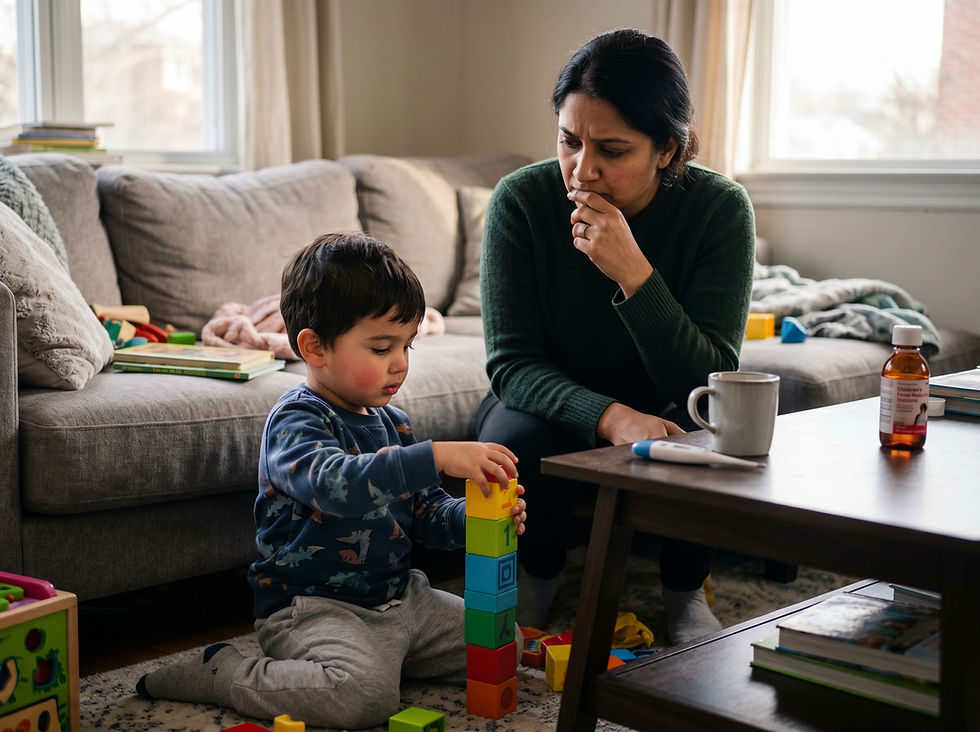
Q: My child's fever returned after recovering from Influenza A. Is this normal?
- Myeongchan Kim, MD

- Jul 1
- 2 min read
Updated: Jul 8
Medically reviewed by Sang Hyun Ahn, MD
Content edited by Myeongchan Kim, MD
This post is a dramatization of a question and answer session experienced by our actual medical reviewers. Please note that this content is for informational purposes only and does not constitute medical advice. Always consult with a qualified healthcare professional for any health concerns or before making any decisions related to your health or treatment.

Question:
My child started having a high fever over the weekend. A few days later, they were diagnosed with Influenza A and received IV treatment. The high fever continued for two more days before breaking. After that, a mild fever persisted along with a severe cough and nasal congestion, for which we visited a clinic and received prescribed medication.
Yesterday, their temperature finally returned to normal, and I thought the flu was completely gone. However, this morning, the fever spiked again to over 38°C (100.4°F). It has been about six days since the initial IV treatment. Is it possible for a fever to return like this? The cough has almost completely stopped (even while sleeping), and the nasal congestion is much better, but I am very worried about the new fever. Is this just a normal part of the healing process for the flu?
Answer:
I understand how worried you must be, especially since it seemed like your child was getting better before the fever suddenly returned.
Based on the timeline you provided, rather than this being a continuation of the flu itself, we need to consider the strong possibility of a secondary bacterial infection.
Here is an assessment of the current situation:
Temporary improvement after the flu followed by a returning fever is a classic pattern for a secondary infection.
A fever from the flu typically resolves within 3 to 5 days.
A fever recurring on the 6th day is not a typical part of the normal flu healing process.
Please observe your child closely for the following:
Is their breathing faster than normal or labored?
Are they complaining of chest pain or ear pain?
Do they appear unusually lethargic, weak, or lacking energy again?
I highly recommend visiting your pediatrician or a doctor for an in-person evaluation today. A doctor will need to examine your child, listen to their chest, and check their ears to rule out secondary infections such as pneumonia or otitis media (an ear infection). Depending on the examination, a chest X-ray or antibiotic treatment may be necessary.
While at home, you can manage the situation by:
Administering fever reducers (antipyretics) if the fever is making your child uncomfortable.
Ensuring they drink plenty of fluids to stay well-hydrated.
Closely monitoring their breathing and overall condition.
It is very common for a child's immunity to temporarily drop after battling the flu, making them more susceptible to secondary infections. Please seek a medical evaluation promptly so your child can receive the appropriate treatment for a quick recovery.

For extra peace of mind and clear guidance when tracking your child's symptoms, the FeverCoach app is always there to help.