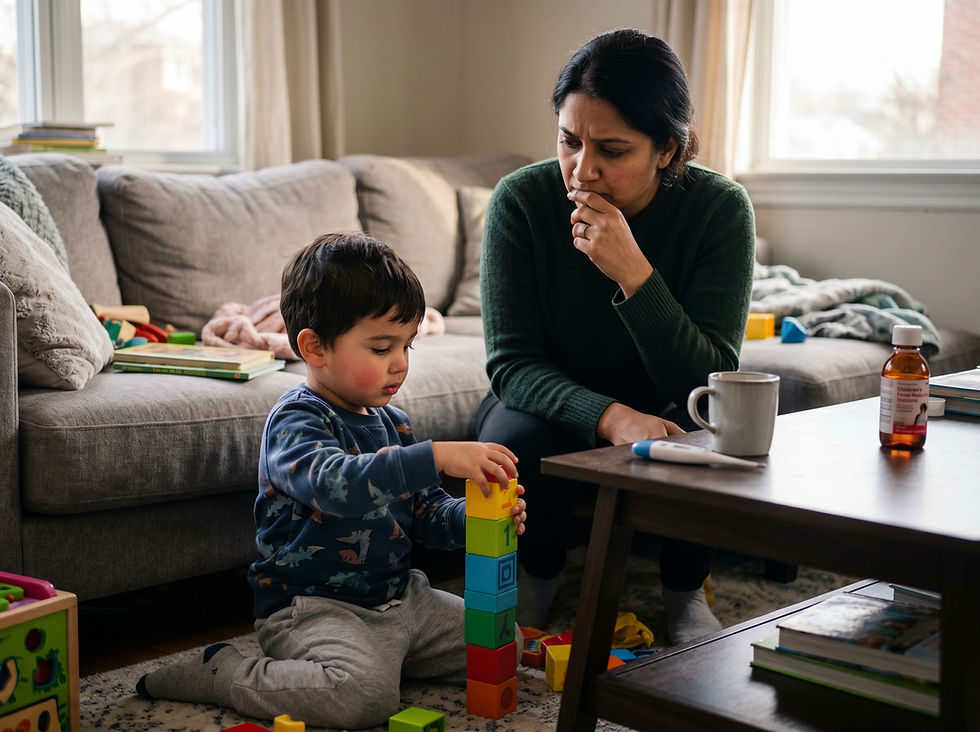
Q: My child has had a high fever for a week, severe coughing, vomiting with blood, and the fever just spiked again to 39°C. What should I do?

Updated: Sep 7
Medically reviewed by Sang Hyun Ahn, MD
Content edited by Myeongchan Kim, MD
This post is a dramatization of a question and answer session experienced by our actual medical reviewers. Please note that this content is for informational purposes only and does not constitute medical advice. Always consult with a qualified healthcare professional for any health concerns or before making any decisions related to your health or treatment.

Question:
My child has been suffering from a high fever and severe cough for a week. The symptoms started last Friday. On Saturday, we got a prescription, but the fever didn't drop. On Monday, we visited the clinic; a flu test came back negative, and a chest X-ray showed no signs of pneumonia and wasn't too bad.
However, the cough is very severe, especially at night, often leading to vomiting. Occasionally, there is blood mixed in the vomit. My child cannot eat anything and complains of a severe sore throat and chest/stomach pain.
This morning, the fever finally went down, though the cough continued. We went to a larger hospital, and the doctor gave the same diagnosis, saying it seemed like an improving cold. But this evening, my child became lethargic again, and the fever spiked back up to 39°C.
Is my child actually getting better, or do we need further testing?
Answer:
It is completely understandable that you are very worried about your child's high fever and severe cough lasting for a week.
Current Situation Summary:
Fever and cough started last Friday. A flu test was negative, and a chest X-ray showed no pneumonia.
The fever broke this morning but spiked again to 39°C this evening.
Severe coughing is causing vomiting (sometimes with blood), difficulty eating, sore throat, and epigastric (stomach/chest) pain.
Red Flags (Go to the Emergency Room IMMEDIATELY if you see any of these):
Difficulty breathing: The area under the ribs sucks in when breathing, or you notice nasal flaring.
Cyanosis: The lips or nails are turning blue.
Severe dehydration: Continuous vomiting making it impossible to drink water, or there has been no urine output for over 8 hours.
Altered mental state: Your child is hard to wake up or unable to make eye contact.
What You Can Do at Home Now:
Fever Reducers: Administer an appropriate fever-reducing medication based on your child's weight and age, following the package instructions.
Hydration: Offer a sip or two of water or an electrolyte drink every 5-10 minutes. Giving too much fluid at once can trigger more vomiting.
Elevate the Upper Body: Prop your child up in a half-sitting position using two pillows to help reduce coughing and vomiting.
Monitor Bloody Sputum/Vomit: Keep a record of the amount (e.g., just a streak on a tissue vs. a mouthful), the color (bright red vs. brown), and the frequency.
Questions to Discuss with Your Doctor:
When you see a doctor again, consider asking the following questions:
"Even though the chest X-ray is normal, have atypical infections like Mycoplasma or Pertussis (whooping cough) been ruled out?"
"Is the bloody sputum just from throat irritation, or are additional tests (blood test, CRP, Mycoplasma antibodies) needed?"
"Since the fever has lasted for 7 days and has returned, what is the plan for re-evaluation?"
Next Steps:
If there are no red flags and your child can sip water: Call your pediatrician tomorrow morning. Explain that it is day 7 of the fever, the fever has returned, there is bloody sputum, and the child cannot eat. Request a same-day re-evaluation.
If any red flags appear tonight or your child cannot drink fluids at all: Visit the nearest emergency room immediately.
Additional Note:
While some viral infections can cause high fevers for 5 to 7 days, a re-evaluation is absolutely necessary when symptoms like bloody sputum, continuous vomiting, and an inability to eat are present. Furthermore, a fever that breaks and then spikes again can be a sign of a secondary bacterial infection or an atypical pathogen. Please ensure your child is evaluated in person by a doctor as soon as possible to determine the exact cause and adjust the treatment plan.

For extra peace of mind and clear guidance when tracking your child's symptoms, the FeverCoach app is always there to help.