
Q: My child has a stomachache, vomiting, and a rising fever up to 39°C. What should I do next?

Updated: Sep 7
Medically reviewed by Sang Hyun Ahn, MD
Content edited by Myeongchan Kim, MD
This post is a dramatization of a question and answer session experienced by our actual medical reviewers. Please note that this content is for informational purposes only and does not constitute medical advice. Always consult with a qualified healthcare professional for any health concerns or before making any decisions related to your health or treatment.
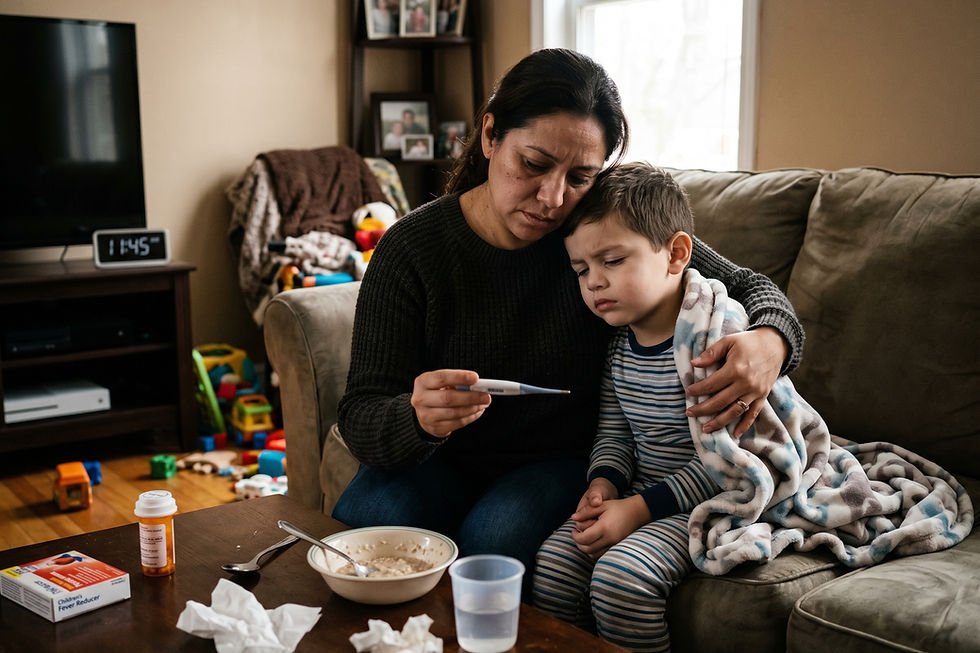
Question:
My child started with a stomachache at 5:00 AM, vomited water at 6:30 AM, and seemed to feel better after getting some sleep. They ate a little bit of rice and egg at 8:30 AM and had a normal bowel movement, but then they vomited again at 10:30 AM.
We went to the clinic, and their temperature was 37.4°C. An X-ray showed gas in their stomach. The doctor suspected gastroenteritis, prescribed medication, and advised getting an ultrasound at a larger hospital if the pain worsens. However, as soon as we got home, the fever rose to 37.9°C. I gave them some porridge and the prescribed stomach medicine, but the fever went up to 38.3°C. I then gave them a fever reducer, and they have been sleeping for an hour, but their temperature is now 39°C.
Is this high fever due to gastroenteritis? Should we get a flu test? I'm not sure what to do next. Should we go back to the hospital for an abdominal ultrasound and IV fluids for the fever?
Answer:
It must be very worrying to see your child suffering from a stomachache, vomiting, and now a high fever.
To summarize the current situation:
• Your child experienced an early morning stomachache followed by vomiting, and a clinic visit revealed gas on an X-ray.
• There was a rapid fever spike upon returning home (37.4°C → 37.9°C → 38.3°C → 39°C).
• The fever is persisting at 39°C even an hour after taking a fever reducer.
What to Do Right Now:
Recheck the temperature: If you are using an armpit thermometer, remember to add 0.5°C to the reading for a more accurate core temperature.
Hydration: Do not wake the child up just to drink, but whenever they awake, offer small, frequent sips of water or an electrolyte solution.
Keep them cool: Dress the child in light clothing and maintain a comfortable room temperature around 24-26°C.
When to Revisit the Hospital:
→ Go to the ER immediately if: You notice their abdomen is hard and they won't let you touch it due to severe pain, their breathing seems abnormal while sleeping, or if there are signs of severe dehydration (e.g., no urination for more than 8 hours).
→ See a doctor today if: The fever remains above 39°C two hours after taking a fever reducer, if the vomiting repeats continuously, or if you notice any bloody stools.
While gastroenteritis can certainly cause a high fever, it is also very common for respiratory infections like the flu or COVID-19 to begin with gastrointestinal symptoms like vomiting in children. Because of this, assessing for dehydration and running infection tests (like a flu or COVID-19 swab) may actually be a higher priority right now than an abdominal ultrasound.
Please continue to closely monitor your child's condition at home. If the high fever persists despite medication and the vomiting continues, please take them to the emergency room for an in-person medical evaluation and appropriate IV fluid treatment.
For extra peace of mind and clear guidance when tracking your child's symptoms, the FeverCoach app is always there to help.