
Q: My 9-year-old child is 122cm and 21kg, eats very little, and hasn't gained weight in a year. Should we visit a hospital?

Updated: Sep 6
Medically reviewed by Sang Hyun Ahn, MD
Content edited by Myeongchan Kim, MD
This post is a dramatization of a question and answer session experienced by our actual medical reviewers. Please note that this content is for informational purposes only and does not constitute medical advice. Always consult with a qualified healthcare professional for any health concerns or before making any decisions related to your health or treatment.
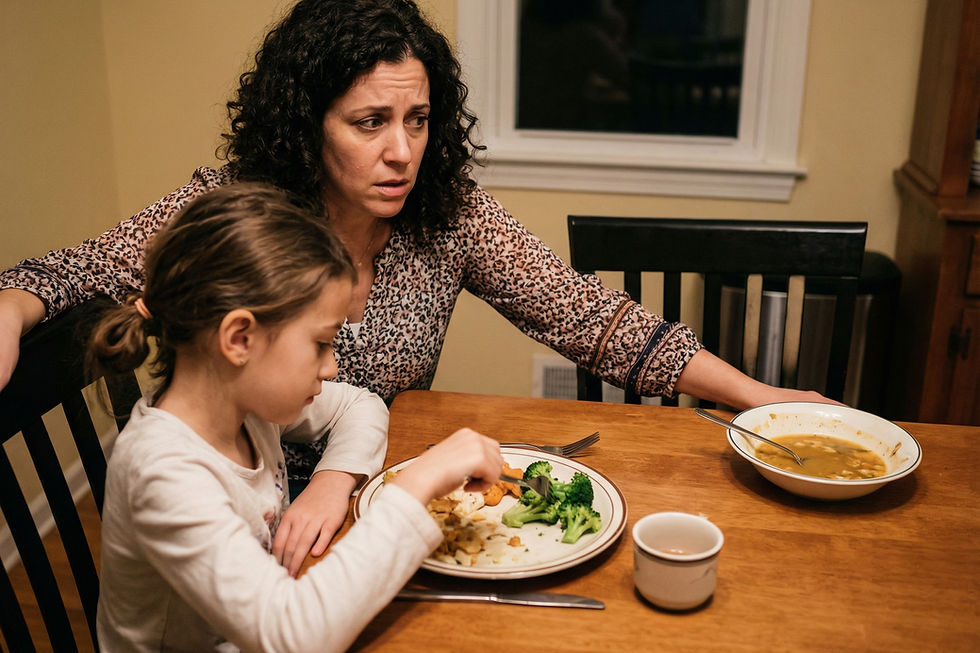
Question:
I am very frustrated with my 9-year-old child's growth and eating habits. She is currently in the 4th grade, but her height is still 122 cm and she weighs only 21 kg. She dislikes eating, has a very poor appetite, and only eats small amounts of her favorite foods. Today, she only had a few spoonfuls of soup and a couple of rice cakes. I am worried to the point of suspecting an eating disorder.
She grows barely 5 cm a year, and her weight has been stuck in the 21 kg range for a whole year. Is this acceptable, or is there an underlying problem? Should I take her to a hospital? She is very sensitive to taste and physical sensations, gets scared easily, and refuses to eat even more when she feels slightly unwell. It is extremely hard to even get her to take vitamins. What should I do in this situation? Should I just wait until she outgrows it?
Answer:
You must be very worried about your 4th grader's growth and eating struggles. Going through this at every meal — while also watching her growth slow — is exhausting, and the fact that you've noticed and are asking now means your instincts are right.
Before the numbers, one thing I want you to hear first. From what you describe — strong sensitivity to taste and physical sensation, food refusal that worsens with the slightest discomfort, fearfulness, even resisting vitamins — this pattern doesn't look like ordinary picky eating. It looks much more like a sensory-driven feeding profile, the kind clinicians recognize on the ARFID (Avoidant/Restrictive Food Intake Disorder) spectrum. Why this matters: this is a neurosensory temperament, not a discipline problem and not something you caused. Pressure tends to make it worse, because her nervous system reads pressure as threat. Naming this correctly changes what the right approach looks like.
[Current Growth Status]
9-year-old girl, height 122 cm — around the 3rd percentile
Weight 21 kg — approximately the 0.8th percentile (well below the 1st), which falls in the moderate-to-severe underweight range
Height velocity ~5 cm/year — within the lower part of the normal prepubertal range (~5–6 cm/yr)
No weight gain for 12 months — the most concerning finding
The weight Z-score (−2.4) is notably lower than the height Z-score (−1.8), which suggests acute undernutrition layered on top of a smaller build — not simply "she's a petite child."
[Why I'd Recommend an Evaluation Soon]
A full year of weight stagnation is past the "wait and see" range and warrants a workup to identify the cause.
Her food repertoire and intake volume are functionally restricting her nutrition.
Sensory hypersensitivity and food-related anxiety are themselves part of what needs to be assessed, ideally by someone familiar with pediatric feeding disorders.
A pediatric endocrinology or growth clinic is a reasonable first stop. A pediatric feeding / eating-behavior clinic is also valuable if accessible in your area.
[What the Workup Typically Includes]
Full growth-curve review (the trajectory matters more than any single data point)
Labs: CBC, thyroid panel, ferritin, vitamin D, celiac screen
Bone age X-ray
GI evaluation if symptoms suggest it
ARFID / sensory-feeding assessment
[Things You Can Try at Home in the Meantime]
Raise calorie density, not volume. This is the single most useful shift for a sensory-sensitive child. Add butter or sesame oil into rice, melt cheese into soup, use whole milk instead of low-fat, stir egg yolk or nut butter into foods she already accepts. More calories per bite — not more bites.
Lower the emotional temperature of meals. Pressure is a strong appetite suppressant for these children. A calmer table, over weeks, means more eating — not less.
Expand through low-stakes exposure. Cooking together, letting her smell or touch a new food without any obligation to eat it, gradually widens her "safe food" list. Insisting she taste does the opposite.
Don't make supplements a daily battle. If oral vitamins are a war, that war costs more than it gains. Ask the pediatrician about alternative forms or whether they're truly necessary right now.
Please don't carry this alone. A year of stalled weight is not a parenting failure — it's a signal worth listening to, and the right next step is a medical evaluation, not stricter mealtimes. Make the appointment soon.

For extra peace of mind and clear guidance when tracking your child's symptoms, the FeverCoach app is always there to help.