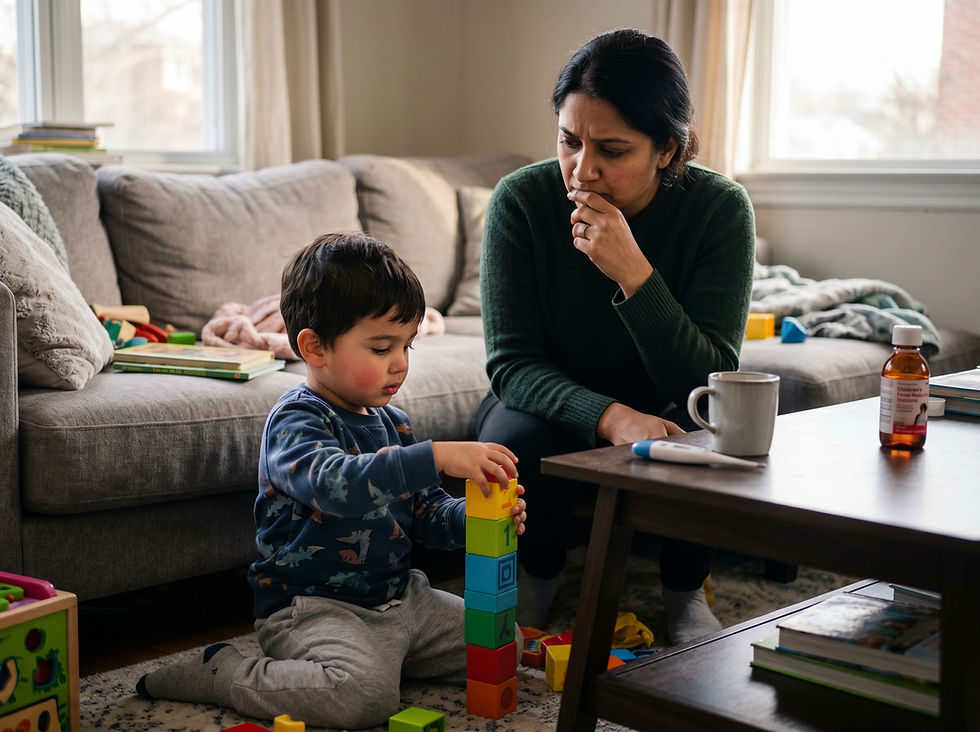
Q: My 104-day-old baby has a fever of 38.3°C and the older sibling has Influenza A. When should we get tested and can I use a cooling patch?

Updated: Sep 7
Medically reviewed by Sang Hyun Ahn, MD
Content edited by Myeongchan Kim, MD
This post is a dramatization of a question and answer session experienced by our actual medical reviewers. Please note that this content is for informational purposes only and does not constitute medical advice. Always consult with a qualified healthcare professional for any health concerns or before making any decisions related to your health or treatment.
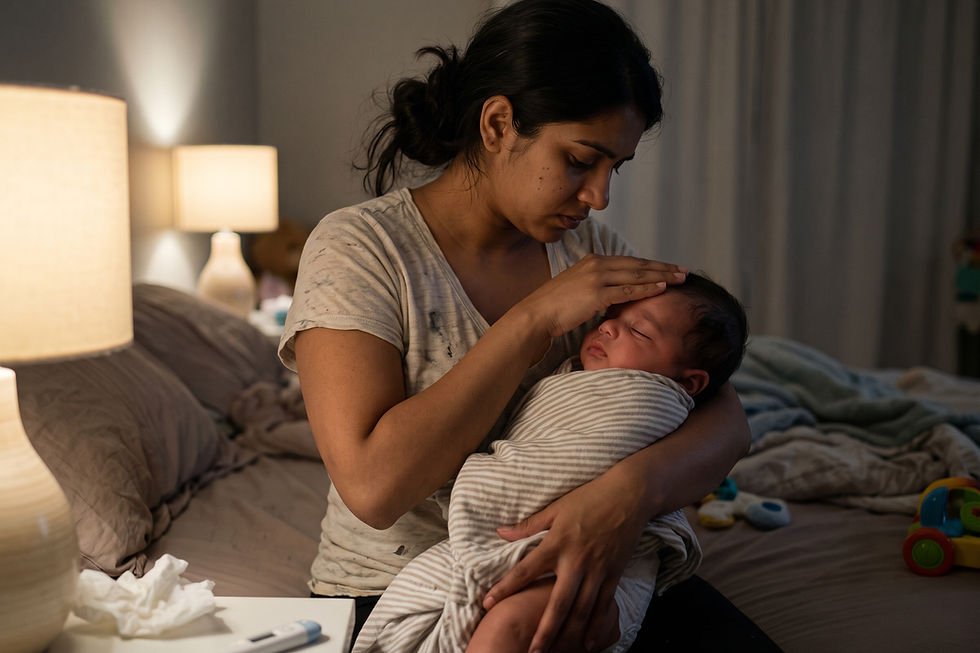
Question:
My 104-day-old baby currently has a fever of 38.3°C (100.9°F). Their older sibling was recently diagnosed with Influenza A, so I suspect the baby might have caught it. The baby had a mild fever starting around 4 PM yesterday, and it began to rise significantly around 1 AM. If we do a flu test today, will it be accurate? The clinic told us to come in 12 hours after the fever reached 38°C.
Also, is it okay to use a cooling fever patch on the baby's forehead? I usually use warm water for a tepid sponge bath, but the fever patch is cold, so I am not sure if it's safe or recommended to use.
Answer:
It is completely understandable that you are worried about your 104-day-old baby's fever, especially with the older sibling recently diagnosed with Influenza A.
Flu Test Timing:
The advice you received from the clinic is correct. It is best to wait at least 12 hours after the onset of a significant fever (38°C or higher) before taking a rapid flu test. Testing too early in the illness can result in a false negative because the viral load might not be high enough to detect yet. Being evaluated tomorrow morning should provide a much more accurate result.
Fever Management and Cooling Patches:
Cooling fever patches and tepid water massages are generally not recommended. The cold sensation from patches or damp cloths can make the baby feel uncomfortable, causing them to shiver or cry, which can actually generate more body heat. Furthermore, their effectiveness in safely reducing a fever is unproven. Instead, managing the fever with a weight-appropriate dose of infant acetaminophen (such as Tylenol) is a much more effective and comfortable approach. Please consult your doctor or pharmacist for the exact dosage based on your baby's current weight.
Home Care Guidelines:
Hydration: Offer breastmilk or formula more frequently in smaller amounts to prevent dehydration.
Clothing: Dress the baby lightly in a single, breathable layer so body heat can escape.
Room Temperature: Maintain a comfortable indoor temperature, ideally around 24–26°C (75–79°F).
⚠️ When to Visit the Emergency Room Immediately:
Please seek immediate emergency medical care if you notice any of the following red flags:
Fast, labored, or difficult breathing (e.g., nostrils flaring, chest pulling in).
No wet diapers for 8 hours or more.
The baby is excessively lethargic, unusually floppy, or unresponsive.
A fever of 39°C (102.2°F) or higher that persists despite medication.
Because a 3-month-old baby has a developing immune system, they are at a higher risk for flu-related complications. It is very important that you follow up with your pediatrician for an in-person evaluation. Please make sure to be seen by a doctor as soon as the 12-hour window has passed to get accurately tested and to discuss appropriate treatments, such as antiviral medications.

For extra peace of mind and clear guidance when tracking your child's symptoms, the FeverCoach app is always there to help.