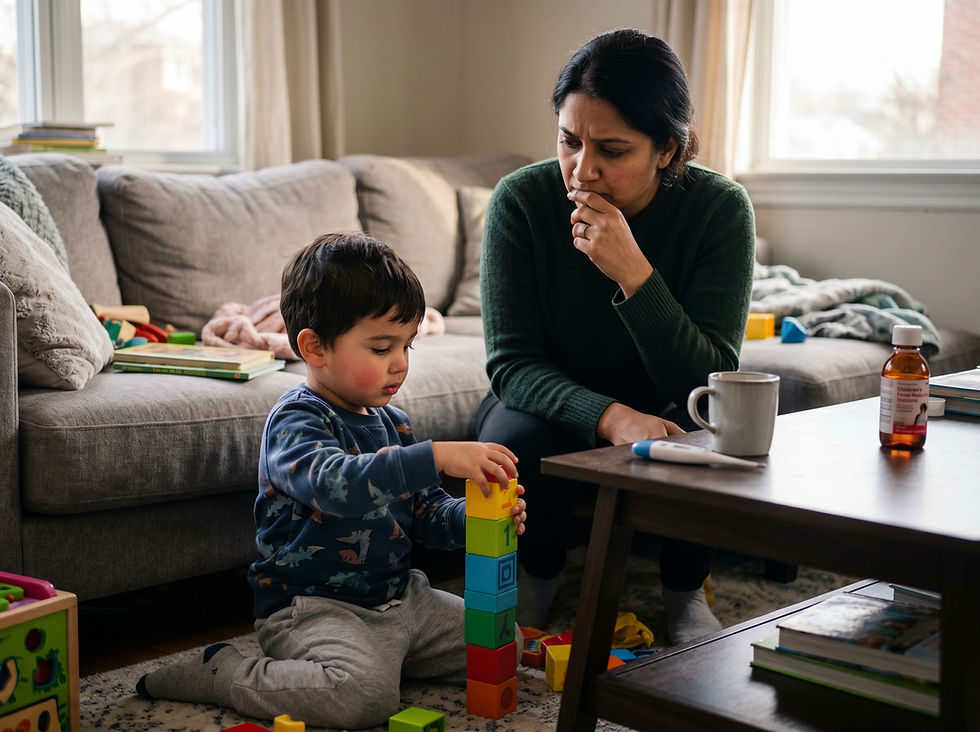
Q: Is it safe to give my child cold medicine after a 4-hour interval if they want to sleep?

Updated: Sep 7
Medically reviewed by Sang Hyun Ahn, MD
Content edited by Myeongchan Kim, MD
This post is a dramatization of a question and answer session experienced by our actual medical reviewers. Please note that this content is for informational purposes only and does not constitute medical advice. Always consult with a qualified healthcare professional for any health concerns or before making any decisions related to your health or treatment.

Question:
I recently had the flu and am finally recovering. Unfortunately, my child just started running a fever. We went to the clinic, but the flu test came back negative. The doctor mentioned it might be too early to detect the virus and advised us to return for another test if the high fever persists.
When my child's fever spikes over 39°C (102.2°F), I give them a fever reducer and do a tepid water massage. This brings the temperature down to the low 38°Cs (around 100.4°F), but it goes back up after a while.
I gave them their prescribed cold medicine at 6:00 PM. It hasn't even been 5 hours yet, but my child is very sleepy. Can I give the next dose of cold medicine now, after just 4 hours? Or should I let them sleep and wake them up after 5 to 6 hours to give the medicine?
Answer:
It must be very worrisome to see your child sick with a fever, especially right after you struggled with the flu yourself.
Regarding Medicine Intervals:
If 4 hours have passed since the last dose, it is safe to give the cold medicine. Most cold medicines are designed to be taken at 4 to 6-hour intervals. However, there is no need to force a sleepy child to stay awake or to wake them up strictly to give medicine. Sleep is essential for recovery, so let your child rest comfortably and give the medicine when they naturally wake up.
Evaluating the Current Situation:
Fever Response: A fever dropping from over 39°C to the low 38°Cs after taking a fever reducer is a normal and effective response.
Flu Test: Your doctor's clinical judgment is appropriate. A flu test can show a false negative if performed in the very early stages of the illness.
Fever Management: Please note that tepid water massages are generally no longer recommended, as they can cause shivering which may inadvertently raise the core body temperature. Using fever-reducing medication alone is sufficient.
Home Care Instructions:
Fever Reducers: Maintain a 4 to 6-hour interval for medications like Acetaminophen or Ibuprofen.
Hydration: Encourage frequent fluid intake whenever the child is awake.
Comfort: Dress the child in light, breathable clothing and keep the room at a comfortable, slightly cool temperature.
Rest: Adequate sleep is the most important factor for recovery.
When to See a Doctor Again:
Please bring your child back for an in-person medical evaluation if you notice any of the following:
Fever stays at or above 40°C (104°F) despite taking fever reducers.
High fever persists for 3 days or more.
The child has difficulty breathing or appears severely lethargic.
The child completely refuses to drink fluids.
I hope both you and your child feel much better soon!

For extra peace of mind and clear guidance when tracking your child's symptoms, the FeverCoach app is always there to help.