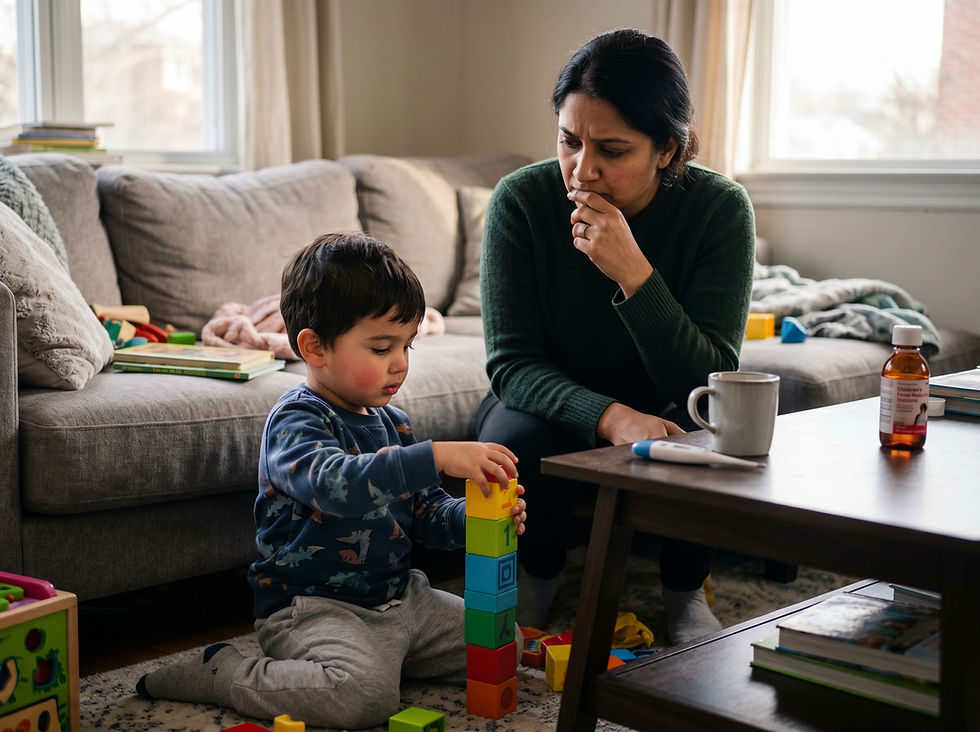
Q: Flu test was negative today, but high fever (39°C) keeps returning. Should we retest tomorrow?
- Myeongchan Kim, MD

- Jul 10
- 3 min read
Updated: Jul 21
Medically reviewed by Sang Hyun Ahn, MD
Content edited by Myeongchan Kim, MD
This post is a dramatization of a question and answer session experienced by our actual medical reviewers. Please note that this content is for informational purposes only and does not constitute medical advice. Always consult with a qualified healthcare professional for any health concerns or before making any decisions related to your health or treatment.

Question:
My child had a cough, a runny nose, and a mild fever (37.4°C) yesterday morning. We visited a clinic and received cold medication. Around noon, my child suddenly had projectile vomiting and just wanted to lie down. By 3:30 PM, the fever spiked to 39.5°C. I gave a fever reducer, and the temperature stayed normal overnight.
Today at 6:00 AM, the fever went back up to 39°C, so I gave another dose. At 9:30 AM, our doctor recommended a flu test, which came back negative. At 3:00 PM, the fever was 39°C again, dropped to 37°C after medication, but by 8:00 PM, it crossed 39°C once more. I just gave another dose of fever reducer.
Should we do another flu test tomorrow? Could this just be a feverish cold, or should I be worried about another cause?
Answer:
It must be very worrisome to see your child struggling with a high, recurring fever since yesterday.
Current Situation Summary:
Yesterday: Cold symptoms progressed to sudden projectile vomiting and a high fever of 39.5°C.
Today: The flu test was negative, but the fever repeatedly spikes above 39°C once the fever reducer wears off.
The cough and runny nose continue, and your child appears lethargic (wants to keep lying down).
Should You Retest for the Flu?
Flu tests are most accurate when performed within 48 hours of symptom onset. Even if the initial result is negative, false negatives can occur in the very early stages of the illness. However, your child's overall condition is much more important than simply getting a retest.
Seek an in-person pediatric evaluation tomorrow morning (and consider discussing a flu retest) if any of the following apply:
The fever persists for 3 days or more (e.g., continuing to spike to 39°C+ into tomorrow morning).
The child remains extremely lethargic and only wants to lie down, even after the fever comes down.
Complete refusal of water and food, or no urine output for more than 8 hours.
Rapid breathing or chest retractions (the chest pulling in while breathing).
Repeated vomiting or complaints of a severe headache.
If the fever is the main issue and your child's energy improves when the fever drops:
Normal viral colds can also cause high fevers for 2 to 3 days.
You can monitor the child for one more day at home while focusing heavily on hydration.
Give fever reducers only when the child is uncomfortable or in pain (following appropriate 4 to 6-hour intervals depending on the medication).
What to Do at Home Right Now:
Offer one or two sips of water frequently, every 5 to 10 minutes.
Dress your child in light, breathable clothing and keep the room temperature comfortably cool.
Monitor urine frequency and color (dark yellow urine means they need more fluids).
Assess your child's condition tomorrow morning. If the high fever continues or the lethargy persists, please follow up with your doctor to discuss whether a retest or further evaluation is necessary. If any new severe symptoms develop—such as difficulty breathing, repeated vomiting, or severe lethargy—seek immediate medical attention.

For extra peace of mind and clear guidance when tracking your child's symptoms, the FeverCoach app is always there to help.