
Carbon Monoxide Safety for Kids: Heating and Alarm Response

To help prevent carbon monoxide poisoning, keep fuel-burning heating equipment maintained and properly vented, and make sure your home has working carbon monoxide detectors. If a CO alarm sounds, get everyone outdoors into fresh air immediately and call 911 from outside—even if everyone feels well. Take the same action if you suspect exposure because several household members develop headache, dizziness, nausea, or unusual sleepiness. Do not wait to find the source.
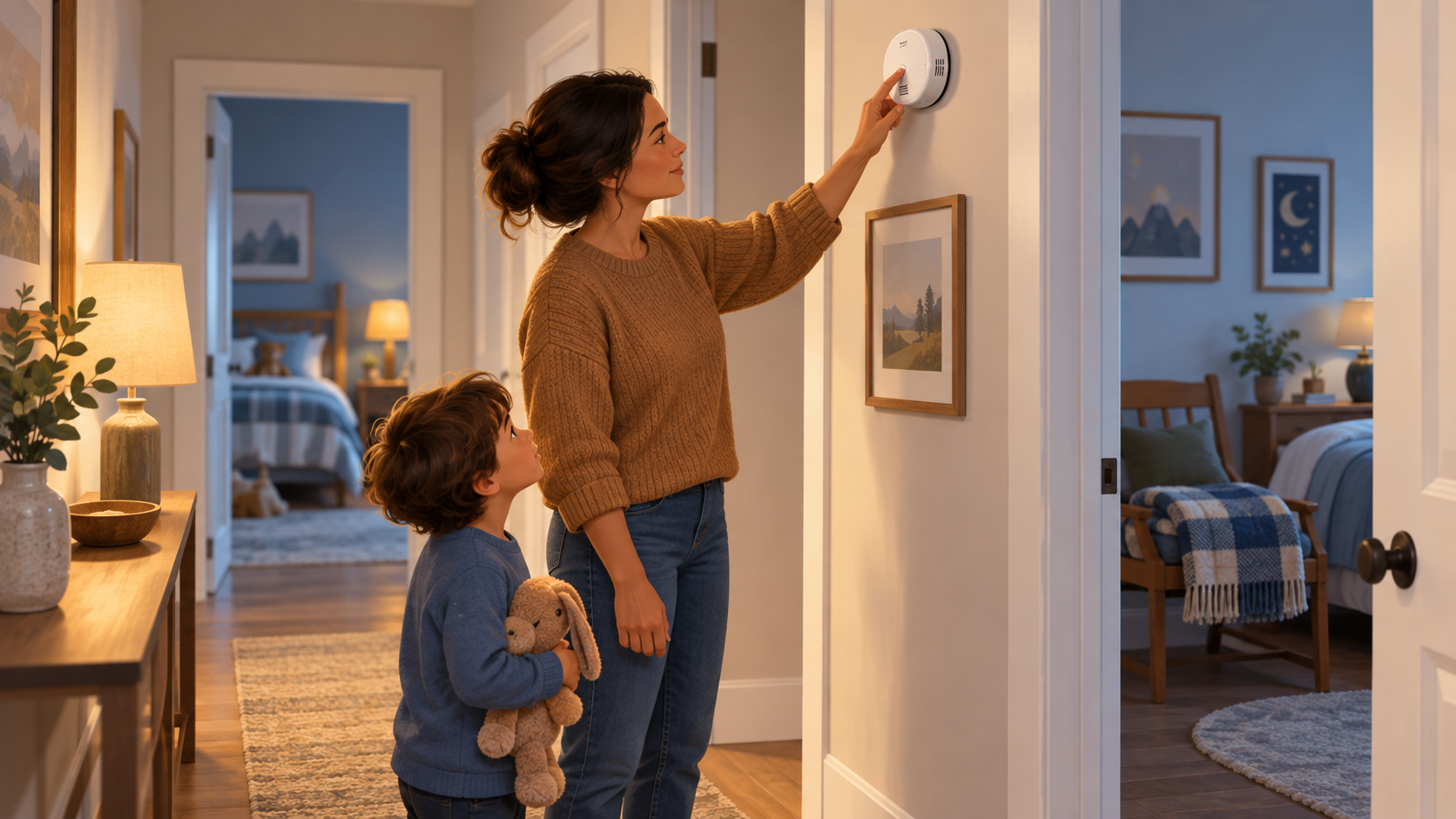
Why carbon monoxide can go unnoticed
Carbon monoxide, or CO, is an invisible, odorless gas produced when fuels burn. You cannot rely on smell to detect it. A furnace, fireplace, water heater, or other fuel-burning appliance can become a source when it malfunctions or is not properly vented.
Symptoms can resemble a common illness: headache, dizziness, weakness, nausea, vomiting, or unusual tiredness. More serious exposure may cause confusion, chest pain, trouble breathing, or loss of consciousness. Babies and young children cannot always describe what they feel; unusual sleepiness or difficulty waking deserves immediate attention.
Several people feeling sick at the same time, especially while at home, is a reason to consider CO exposure. Feeling better outdoors is another clue, but it does not prove that returning home is safe.
Make a plan before heating season
Use this checklist before your family starts relying on heat:
Arrange professional service. Have fuel-burning heating equipment inspected and maintained. Keep chimneys, flues, and exhaust vents clear and properly connected.
Check detector coverage. Have CO detectors on every level of your home and outside sleeping areas. Follow the manufacturer's placement instructions.
Test and maintain detectors. Follow the manufacturer's schedule for testing, battery replacement, and replacing the device at the end of its service life. A detector that has expired or lost power cannot provide dependable warning.
Check what each alarm detects. A smoke alarm detects CO only if it is also a combination CO alarm.
Practice leaving. Make sure caregivers know how to get children outside and where to meet. Choose an outdoor location away from vehicle exhaust.
If you rent, contact your landlord about heating service, venting problems, and missing or faulty detectors.
Avoid dangerous backup heating during outages
A power outage can make unsafe heating choices tempting. The American Academy of Pediatrics warns about CO exposure from generators, cars, gas stoves, and barbecue grills during winter outages.
Never use a gas stove or oven to heat your home. Never bring a charcoal grill, barbecue grill, or fuel-burning outdoor equipment indoors.
Operate portable generators outdoors, well away from doors, windows, and vents, following the manufacturer's safety instructions. Never run one inside a home, basement, or garage, even with doors or windows open. Do not run a car in an attached garage, even if the garage door is open.
Opening a window does not make these practices safe. If you cannot keep your home warm safely, arrange to stay somewhere with safe heat.
If the CO alarm sounds
Leave immediately. Take children and other household members outdoors into fresh air. Do not pause to look for the source, collect belongings, or reset the alarm.
Call 911 from outside. Say that your carbon monoxide alarm sounded and report anyone's symptoms. Tell the dispatcher if someone remains inside.
Stay outside. Do not reenter until emergency responders say it is safe. Do not go back inside to attempt a rescue.
Follow medical instructions. Report possible exposure even if symptoms improve after leaving. Responders can help determine who needs emergency evaluation.
If someone is unresponsive or is not breathing normally once in a safe location, tell the 911 dispatcher immediately and follow their CPR instructions.
When symptoms need emergency help
If CO exposure is possible, leave and call 911 even when the alarm has not sounded. A missing, faulty, or poorly placed detector may fail to warn you.
Confusion, fainting, trouble breathing, chest pain, seizures, or difficulty waking a child require emergency help. Suspected CO poisoning needs emergency assessment; do not delay evacuation while waiting for a pediatrician's callback or travel to urgent care first.
An isolated mild symptom without a reason to suspect CO can have many causes. Contact your child's pediatrician for advice, and describe any concerns about heating equipment or similar symptoms in other household members.
Sources
This article provides general education for US families and does not replace medical care. For a CO alarm or suspected exposure, get outside and call 911.
By Sang Hyun Ahn, MD