Head Lice in Kids: Safe Treatment and Returning to School

If you find a live crawling louse in your child’s hair, use a head-lice treatment approved for their age and follow its directions exactly. For babies and young children, ask your child’s clinician before using lice medicine; minimum ages differ by product. Children do not need to leave school early because of lice and can generally return after appropriate treatment begins. Nits alone do not require staying home.
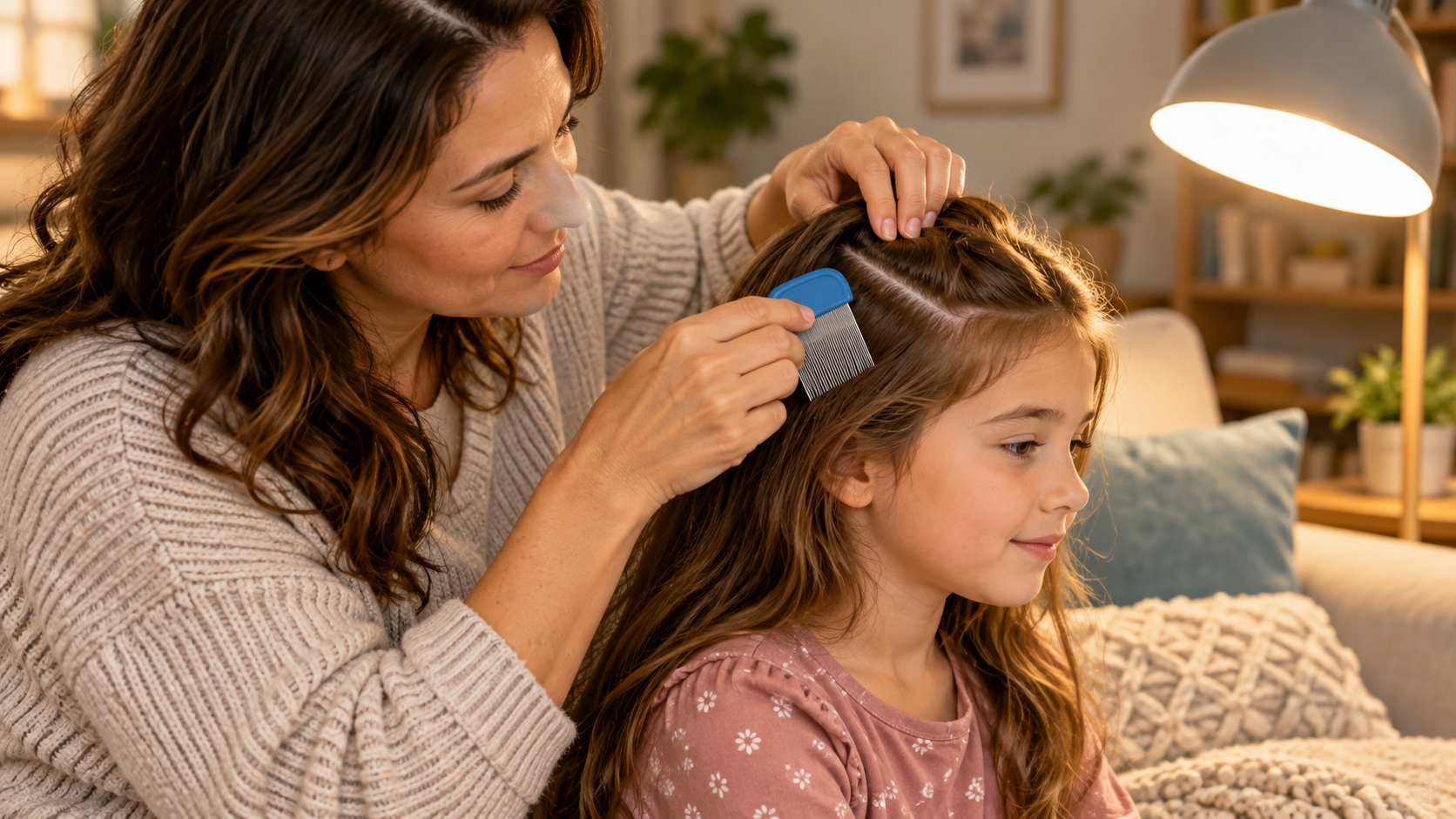
First, check for live lice
Use bright light and a fine-toothed lice comb to examine small sections of hair, especially behind the ears and near the back of the neck. Finding a live crawling louse is the best way to confirm an active infestation.
Nits are eggs attached firmly to hair shafts. Unlike dandruff, they do not brush away easily. Nits can remain after successful treatment, and those farther from the scalp may be empty or dead. If you see only possible nits, or cannot tell what you found, ask your child’s clinician or school nurse before using medicine.
Head lice spread mainly through direct hair-to-hair contact. Having lice does not mean a child or home is dirty.
Choose and use treatment safely
The CDC’s head-lice treatment guidance explains that treatment choice and repeat treatment depend on the medicine used.
Before starting:
Check the minimum age on the exact product. Do not use it on a younger child. Ask a clinician or pharmacist if the label is unclear or your child has allergies or an irritated scalp.
Review allergy warnings. Products containing pyrethrins should not be used by people allergic to chrysanthemums or ragweed.
Read the full directions. Follow the instructions for preparing the hair, application, rinsing, and repeat treatment. Do not use conditioner or a combination shampoo-conditioner immediately before lice medicine.
Use only one lice medicine at a time. Do not mix products, apply extra, leave medicine on longer, or repeat it sooner than directed. Keep it away from the eyes and mouth, and have an adult apply it.
Some medicines kill crawling lice but do not reliably kill the eggs, so another treatment may be needed at a specific interval. Others may not need repeating unless live lice remain. Use the product’s schedule rather than a universal retreatment date.
Do not use kerosene, gasoline, household insect sprays, or pet flea products on a child. Mayonnaise, oils, and similar home remedies are not proven substitutes for effective treatment.
Comb and check after treatment
Use a fine-toothed lice comb to remove lice and nits as directed. Check and comb the hair every two to three days for two to three weeks after treatment, unless the product or clinician gives different instructions.
A few lice moving slowly eight to twelve hours after treatment do not automatically mean you should reapply medicine. If lice appear as active as before, or you find no dead lice, contact your clinician before using more or switching products.
Itching alone does not prove treatment failed. Look for live crawling lice, and seek advice if they persist after the full treatment course and any required repeat application.
Check close contacts and clean the essentials
Check everyone in the household and other close contacts. People with active lice and anyone who shares their bed should be treated at the same time, using treatment appropriate for each person’s age and health. Ask a clinician about treatment for babies, young children, or anyone with a product restriction.
Until treatment is underway, avoid hair-to-hair contact and sharing combs, brushes, hats, or hair accessories.
Focus cleaning on items the affected person used during the two days before treatment:
Wash and dry clothing, towels, and bedding using hot water and high dryer heat when the fabric allows.
Dry-clean items that cannot be washed, or seal them in a plastic bag for two weeks. Keep bags away from children.
Clean combs and brushes, and vacuum places where the person sat or lay down.
You do not need to disinfect the whole home. Do not use insecticide foggers or sprays; they can be harmful and are unnecessary for controlling head lice.
When can my child return to school?
According to CDC guidance for schools and caregivers, a child with head lice can finish the school day, begin treatment at home, and return after appropriate treatment has begun.
Nits can remain even after successful treatment. The CDC supports ending “no-nit” policies that exclude children until every nit is gone. Let the school nurse know and clarify the school’s process if it differs from this guidance. Continue the treatment and checking schedule after your child returns.
When to get medical help
Contact your child’s clinician before treatment if your child is a baby or young child, the diagnosis is uncertain, or you cannot find an age-appropriate product. Also call if live lice persist after correctly completed treatment, or scalp irritation is significant.
Seek prompt medical care for spreading scalp redness, increasing pain, pus, or fever, which may indicate a skin infection.
If treatment is swallowed or used incorrectly, call US Poison Control at 1-800-222-1222 for instructions; do not induce vomiting. Call 911 for trouble breathing, swelling of the tongue or throat, a seizure, collapse, or inability to wake your child.
This article provides general education and does not replace advice from your child’s healthcare professional.
By Sang Hyun Ahn, MD