Hand, Foot, and Mouth Disease: Helping Kids Drink and Knowing When to Call

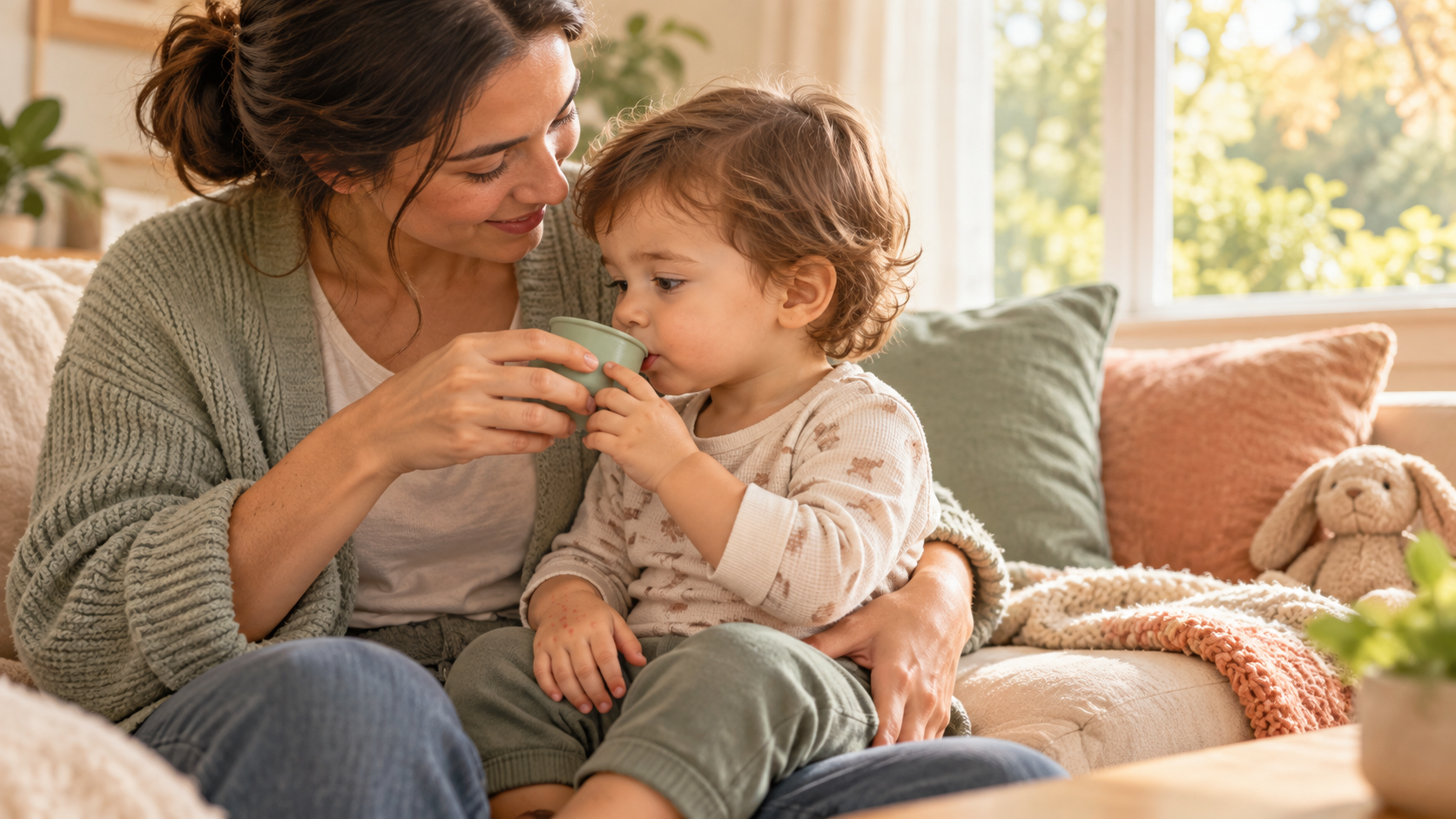
For a child 6 months or older who is alert and swallowing comfortably, offer small, frequent sips when hand, foot, and mouth disease makes drinking painful. Cool drinks may feel better. If your baby is under 6 months, contact their clinician promptly. If a child of any age cannot drink well, call the clinician the same day. Trouble breathing or difficulty waking requires 911.
Why drinking matters more than eating
Mouth sores can make swallowing hurt, so a child may refuse drinks as well as food. The immediate concern is dehydration. Eating less for a short time is usually less concerning if your child is drinking, urinating, and staying reasonably alert.
Hand, foot, and mouth disease is common in children younger than 5. Most children recover in 7 to 10 days, according to the CDC overview, but drinking problems need attention before then.
What to offer, and how
Start with a few sips, pause, and offer more often. Let your child set the pace; do not force a large drink.
Breastfed babies: Continue breastfeeding, offering shorter, more frequent feeds if that is easier.
Formula-fed babies: Offer their usual formula in smaller, more frequent feeds. Never dilute formula.
Babies under 6 months: Keep offering breast milk or usual formula while contacting the clinician. Do not replace feeds with plain water; ask before offering an oral rehydration solution.
Children 6 months and older: Continue their usual milk feeds. For children who already drink water, offer small sips. If intake is falling, a commercial oral rehydration solution may help replace fluid and salts. Ask the clinician what is appropriate for your child's age.
Try cool or room-temperature liquids, whichever hurts less. An open cup, familiar feeding cup, or spoon may be easier than sucking. Keep your child upright and awake. Do not give anything by mouth if they are too drowsy to swallow safely or are having trouble swallowing their saliva; get emergency care.
Avoid acidic drinks such as orange juice or lemonade if they sting. Sports drinks and soda are not substitutes for an oral rehydration solution.
For children already eating solids, offer familiar, soft foods such as yogurt, cooled oatmeal, or mashed potatoes. Avoid hot, spicy, salty, or crunchy foods if they hurt. A frozen oral rehydration pop may appeal to an older child who can manage it safely, with an adult watching. Do not offer loose ice cubes, hard candy, or hard frozen chunks because of choking risk. Follow known food-allergy restrictions, and do not force food.
Help with mouth pain
Ask your child's clinician or pharmacist about an age-appropriate oral pain reliever if pain is preventing drinking. For babies under 6 months, discuss treatment with the clinician first. Do not give ibuprofen to a baby under 6 months or to a child who is dehydrated. Do not give aspirin to children.
Never use over-the-counter oral benzocaine products in children under 2 years. For children 2 years and older, use benzocaine mouth gels or sprays only if your child's clinician specifically directs their use. Do not use lidocaine mouth gels or sprays at any age unless your child's clinician specifically directs their use. These products can cause serious harm in young children.
Pain relief does not replace a hydration check. If your child still cannot drink, seek medical advice that day.
Watch urine, mouth moisture, and alertness
Keep a simple record of drinks or feeds, wet diapers or bathroom trips, and how your child behaves between rests. Watch for:
Fewer wet diapers or less urination than usual, or unusually dark urine.
A dry mouth or few tears when your child normally makes tears.
Less play, unusual irritability, or increasing sleepiness.
Contact the clinician the same day for these changes, especially if drinking is also reduced. Do not wait for an 8-hour cutoff in a young infant or a child who is getting worse.
When to call or get urgent help
The CDC advises contacting a healthcare provider when a child cannot drink well, has fever lasting longer than 3 days, has severe symptoms, or is younger than 6 months.
Get medical advice promptly:
Your baby is under 6 months, even if symptoms seem mild.
Drinking or urination is decreasing, or mouth pain prevents drinking.
Fever lasts longer than 3 days, symptoms worsen, or your child has a weakened immune system.
Get urgent medical evaluation now:
A baby under 3 months has a temperature of 100.4°F (38°C) or higher.
Your child has had no urine for about 8 hours, cannot take fluids, or has several dehydration signs together. Use an emergency department if they appear very ill or prompt pediatric assessment is unavailable.
Your child cannot swallow saliva or develops persistent drooling with difficulty swallowing. Go to an emergency department.
Call 911 for trouble breathing, blue or gray lips, a seizure, collapse, or a child who is hard to wake. Do not give drinks to a child who cannot swallow safely.
Getting back to regular meals
As mouth pain improves, gradually return to familiar meals without pressure. If mealtime struggles continue after recovery, our guide to picky eating in toddlers and preschoolers offers practical next steps.
This article provides general education and does not replace medical evaluation or advice specific to your child.
By Sang Hyun Ahn, MD