Fluoride Toothpaste for Kids: When to Start and How Much to Use

Start brushing with fluoride toothpaste as soon as your baby's first tooth appears. Brush twice a day using a rice-grain-sized smear until the third birthday, then a pea-sized amount beginning at age 3. An adult should put the toothpaste on the brush and help with brushing until about age 8. Babies do not need to be able to spit before starting—the very small amount matters.
These are the American Academy of Pediatrics' fluoride toothpaste recommendations. Fluoride helps strengthen tooth enamel and prevent cavities, including in baby teeth.
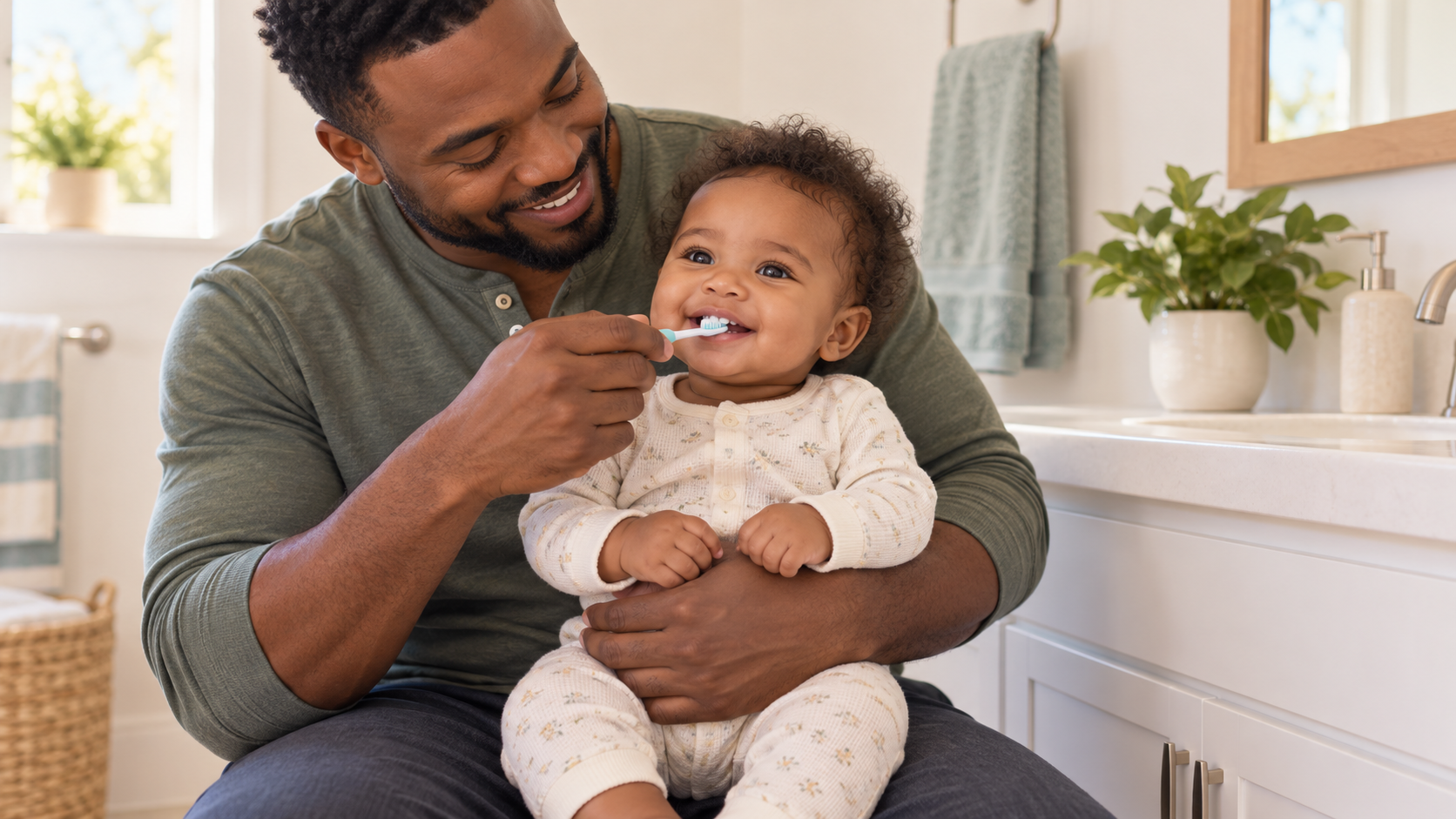
How much toothpaste to use by age
Before the first tooth: You can gently wipe the gums with a clean, damp washcloth. Begin brushing with fluoride toothpaste when a tooth appears.
First tooth through age 2: Use only a thin smear about the size of one grain of rice, twice daily. Do not cover the brush with toothpaste.
Age 3 and older: Use a pea-sized amount, twice daily. Encourage your child to spit it out instead of swallowing it. A larger child does not need a long strip of toothpaste.
Check that the package says the toothpaste contains fluoride; a product labeled for babies is not necessarily a fluoride toothpaste. If your child frequently swallows toothpaste or has trouble spitting, ask the dentist how to manage brushing. Do not increase the amount.
Make brushing a supervised routine
Use a small, soft-bristled toothbrush. Gently brush the fronts, backs, and chewing surfaces of the teeth, including along the gumline. Make one brushing session part of the bedtime routine.
Let your child practice, then help finish. Children usually need hands-on help until about age 8, and some need it longer. Being able to hold a toothbrush does not mean they can clean every tooth well.
Keep these habits together:
An adult dispenses the age-appropriate amount every time.
Encourage spitting when your child can do it; do not teach them to swallow toothpaste.
Store the tube out of reach so your child cannot suck or eat toothpaste from it.
Begin flossing when neighboring teeth touch, with an adult helping.
Arrange a dental home by the first birthday
Choose a dentist who sees young children and establish ongoing dental care by your child's first birthday, even if only a few teeth have appeared and nothing seems wrong. You can arrange the first visit when the first tooth comes in.
A dental home is a regular place for preventive visits, advice, and treatment when a problem arises. The dentist can check early teeth, demonstrate brushing, and discuss your child's cavity risk. The AAP and American Academy of Pediatric Dentistry recommend this timing in their guidance on preventing cavities in young children.
When to call for help
If toothpaste is swallowed: A small amount swallowed during normal brushing is usually not an emergency. If your child eats toothpaste from the tube, swallows more than the normal brushing amount, or you are unsure how much was swallowed, call US Poison Control at 1-800-222-1222. Keep the package nearby and do not make your child vomit. Do not wait for symptoms before calling about a larger or unknown amount.
For dental symptoms: Contact the dentist for persistent tooth pain, a visible hole in a tooth, or swollen gums. Seek same-day dental or medical care for facial swelling, fever with tooth pain, or pain that keeps your child from drinking.
Call 911 for trouble breathing, swelling that makes swallowing difficult, a seizure, or a child who cannot be awakened.
This article provides general education and does not replace advice from your child's dentist or pediatrician.
By Sang Hyun Ahn, MD