Winter Outdoor Safety for Kids: Frostbite and Hypothermia

Children can enjoy winter play when they stay warm and dry, have adult supervision, and take indoor warming breaks. Babies and young children need shorter outings and closer monitoring because they lose body heat more readily. There is no single outdoor temperature or time limit that makes every outing safe. Suspected hypothermia is an emergency: call 911. Suspected frostbite needs prompt medical care.
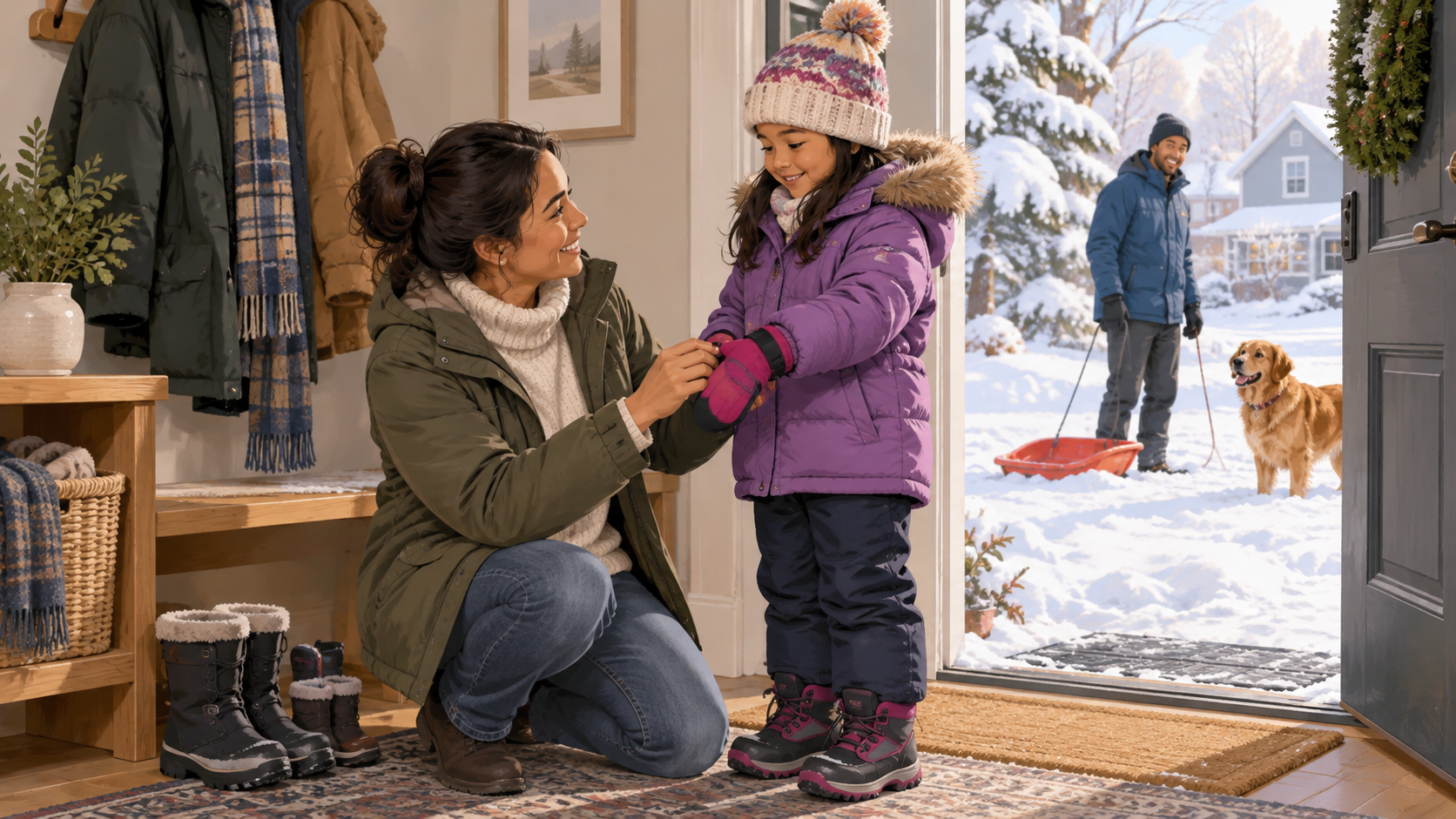
Prepare for the weather and keep clothing dry
Check the forecast, wind chill, and local weather alerts before leaving. Wind and wet clothing increase heat loss. Postpone outdoor play during extreme cold or wind chill warnings, and make sure a warm shelter is close enough to reach quickly.
Use several thin layers, with an insulating layer and a wind-resistant, water-resistant outer layer.
Cover the ears, hands, and feet with a hat, mittens or gloves, warm socks, and boots that keep feet dry. Clothing should allow comfortable movement and should not fit tightly.
Babies and young children generally need one more thin layer than an adult would wear comfortably in the same conditions.
Avoid long scarves and dangling cords that can catch on playground equipment or sleds.
Bring spare mittens and socks. Replace wet clothing promptly, including clothing damp from sweat.
Plan regular indoor breaks before children become very cold. Come inside sooner for persistent shivering, numbness, pain, unusual tiredness, or wet clothing. A child who is absorbed in playing may not notice these changes, so check directly rather than waiting for a complaint.
Hypothermia: call 911 and warm gently
Hypothermia means the body is losing heat faster than it can replace it. It can occur without obvious frostbite. After cold exposure, unusual sleepiness, confusion, clumsiness, or slurred speech should raise concern for hypothermia. Shivering may occur, but stopping shivering while still cold is also concerning. A baby may seem unusually quiet or low in energy, have cold skin, or have a weak cry.
Call 911 immediately if you suspect hypothermia. Do not wait for a temperature reading or for symptoms to improve. The American Academy of Pediatrics winter safety guidance recommends calling 911 for suspected hypothermia.
While help is coming:
Move the child gently into a warm, sheltered place.
Remove wet clothing and wrap them in dry blankets or clothing. Cover the head and neck while keeping the face clear, and focus on warming the body’s core.
Avoid hot baths, heating pads, heat lamps, direct heat from a fire, and rubbing or massaging the limbs.
Do not give anything by mouth if the child is drowsy, confused, or unable to swallow normally.
If the child is unresponsive and not breathing normally, start CPR and follow the 911 dispatcher’s instructions.
Frostbite: protect the skin and get medical care
Frostbite is an injury caused by freezing of the skin and underlying tissue. It often affects fingers, toes, ears, and the nose. Watch for pale or gray skin, burning, numbness, hard-feeling skin, or blisters. Numbness can hide how serious the injury is.
Bring the child indoors and remove wet clothing and any tight items around the affected area. Seek prompt medical care for suspected frostbite, especially if there are blisters, hard skin, or persistent pain or numbness. If the child also has signs of hypothermia, call 911 first.
If the affected area can stay warm afterward, gently warm it in warm—not hot—water, as described in the AAP’s cold weather safety guidance. Check the water with an unaffected adult hand; numb skin cannot judge heat safely.
Do not rub or massage the area, rub it with snow, or break blisters.
Do not use a heating pad, radiator, fire, or other direct heat.
Avoid walking on frostbitten feet unless it is necessary to reach safety.
If refreezing is possible, protect the area with a loose, dry covering and seek emergency medical help instead of thawing it. Refreezing can worsen the injury.
Sledding: supervision, helmets, and a clear slope
Children under 12 should have adult supervision while sledding. Younger children need close, hands-on help; being old enough to ride does not mean they can judge a slope safely.
Choose a gentle slope away from roads, trees, fences, crowds, and frozen water. Avoid icy hills and jumps. Children should wear a properly fitted helmet, sit facing forward, and go down feet first. Do not let them sled headfirst or attach a sled to a moving vehicle. Check the sled for damage and follow its rider and weight limits.
If a child becomes confused, loses consciousness, or has trouble breathing after a crash, call 911.
Snowmobiles: keep the age limits clear
The AAP advises that children under 16 should not operate snowmobiles, and children under 6 should never ride on one, including as passengers. Reaching those ages does not make riding automatically safe.
For older children, follow local laws and the manufacturer’s restrictions. Any passenger must be able to sit securely and reach the designated handholds and foot supports. Use an appropriate, properly fitted helmet, stay on designated trails, keep speeds low, and avoid roads, frozen bodies of water, and poor visibility.
Before any winter outing, agree on where to warm up and when to stop. If symptoms suggest hypothermia, call 911; for suspected frostbite without those emergency signs, arrange prompt medical evaluation.
This article provides general educational information and does not replace medical care for your child.
By Sang Hyun Ahn, MD