


Q: My older child has pneumonia and my 60-day-old infant is coughing. When can they reunite, and should the baby see a doctor?

Medically reviewed by Sang Hyun Ahn, MD
Content edited by Myeongchan Kim, MD
This post is a dramatization of a question and answer session experienced by our actual medical reviewers. Please note that this content is for informational purposes only and does not constitute medical advice. Always consult with a qualified healthcare professional for any health concerns or before making any decisions related to your health or treatment.
Question:
My older child was diagnosed with pneumococcal pneumonia last week and has been receiving outpatient treatment. Their fever resolved after 4 days, and they are now on day 6 of antibiotics. To protect my 60-day-old infant, I have been keeping the baby separated at my parents' house.
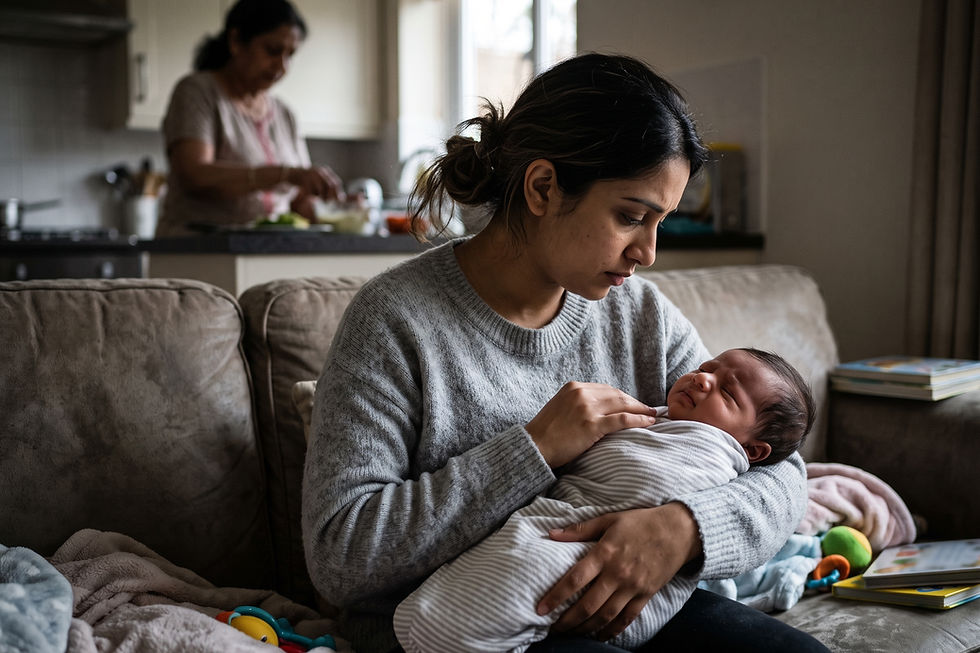
1) When is it generally safe for both children to be in the same home again?
2) My 60-day-old infant has no fever, but sounds a bit congested and occasionally coughs twice in a row. Should I take the baby to see a pediatrician?
Answer:
Caring for a sick child while protecting a two-month-old infant is an exhausting and stressful situation. Because infants under 3 months are particularly vulnerable to respiratory infections, being cautious is completely appropriate.
1. Evaluating Your 60-Day-Old Infant's Symptoms
No fever, occasional congestion, and brief coughing (a couple of coughs in a row) typically point to mild upper airway irritation or a common cold.
Take your baby to a pediatrician today if you observe any of the following warning signs:
Signs of respiratory distress: Chest retracting (skin pulling in between or under the ribs) or nasal flaring while breathing.
Rapid breathing: A breathing rate of 60 breaths per minute or higher (count the breaths for a full 60 seconds while the baby is calm or sleeping).
Poor feeding or dehydration: Feeding volume drops to less than half of normal, or no wet diapers for 8 hours.
Extreme lethargy or irritability: Unusually difficult to wake, floppy, or inconsolable crying.
Worsening cough or sounds: Coughing becomes frequent, or you hear wheezing, grunting, or deep chest rattling.
If none of the above warning signs are present, you can monitor the baby at home with these supportive steps:
Saline drops: Apply saline nasal drops before feedings and bedtime, followed by gentle suction with an aspirator if congestion is blocking airflow.
Humidity: Keep indoor humidity between 40% and 60% with a cool-mist humidifier.
Small, frequent feeds: Offer feeds slightly more frequently in smaller amounts if nasal congestion makes prolonged sucking difficult.
Safe sleep positioning: You may slightly elevate the head end of the crib mattress by placing a folded towel under the mattress (never place loose items inside the crib, and avoid letting the baby sleep in car seats or bouncers).
2. When Can the Siblings Reunite?
Generally, a child being treated for a bacterial respiratory infection like pneumococcal pneumonia is considered much less contagious once they meet three conditions:
They have been on appropriate antibiotics for at least 48 hours.
They have been fever-free without fever-reducing medication for at least 24 hours.
Their overall energy, cough, and symptoms are visibly improving.
Since your older child is on day 6 of antibiotics and has been fever-free for a couple of days, the risk of transmission is significantly reduced.
Practical Steps for Bringing Them Together:
Maintain physical boundaries: For the first few days back together, avoid having the older child touch the baby’s face or hands directly, and avoid kissing.
Hygiene: Ensure the older child washes their hands frequently and coughs or sneezes into their elbow.
Confirm with the pediatrician: Verify with your older child’s doctor how long their antibiotic course should continue and confirm that they consider the child clear to be around a newborn.
Separate if symptoms worsen: If the 60-day-old develops any signs of respiratory distress, fever, or poor feeding, separate them again and have the baby evaluated by a pediatrician immediately.
In summary, if your infant continues to breathe comfortably, feeds well, and stays alert, home care with nasal saline is reasonable. However, because infants under 3 months can worsen quickly, seek an immediate medical evaluation if you notice fast breathing, chest retractions, or a drop in alertness and feeding.

For extra peace of mind and clear guidance when tracking your child's symptoms, the FeverCoach app is always there to help.



