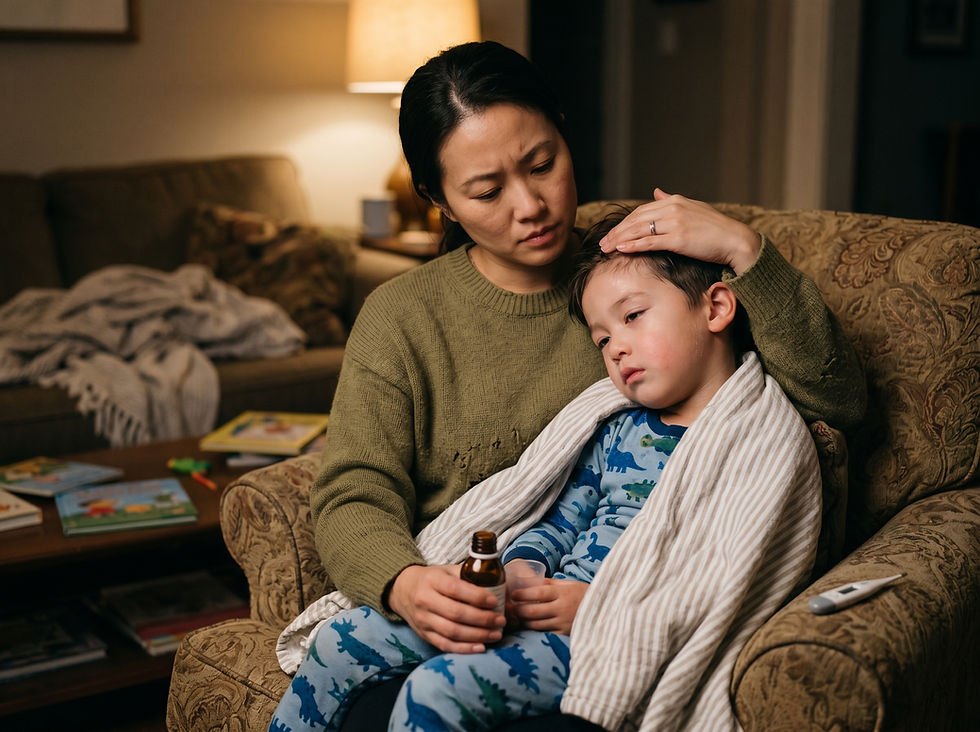
Q: My 7-year-old has had a cold for a week and developed a 38°C fever, but is still energetic. Could it be pneumonia?

Medically reviewed by Sang Hyun Ahn, MD
Content edited by Myeongchan Kim, MD
This post is a dramatization of a question and answer session experienced by our actual medical reviewers. Please note that this content is for informational purposes only and does not constitute medical advice. Always consult with a qualified healthcare professional for any health concerns or before making any decisions related to your health or treatment.
Question:
My 7-year-old child developed mild nasal congestion and a runny nose late last week. Over the weekend, the runny nose worsened and a slight, occasional cough started, so we saw a doctor and got medication. A couple of days ago, the cough became slightly more noticeable, and last night a fever of 38°C (100.4°F) appeared for the first time.

I gave fever reducer, and the temperature came back down to normal through the morning. We revisited the clinic today and received updated cold medicine—the doctor noted that the throat is not severely swollen, and my child doesn't complain of a sore throat. Since this afternoon, the temperature has been fluctuating between normal, low-grade fever, and 38°C again. The cough is still on the mild side. I'm very anxious about whether this is just a regular cold running its course or if it could be turning into pneumonia. What's surprising is that my child's energy is still fantastic—running around and playing normally even with the 38°C fever. Should I continue to observe at home?
Answer:
It is completely understandable to feel concerned when a fever appears a few days into a cold. However, the overall picture you described is reassuring.
Current Clinical Assessment
High energy and playfulness: This is one of the most reliable indicators of a child's overall well-being. A child who is running around and playing normally is generally handling the illness well.
Fever around 38°C (100.4°F): This is a low-to-moderate fever and manageable, especially since it previously responded well to fever reducers.
Mild cough and no throat pain: These symptoms align closely with a standard upper respiratory viral infection (common cold).
Pneumonia Signs vs. Your Child's Symptoms
Parents often worry about pneumonia when a cough is present alongside a fever. Key warning signs of pneumonia typically include:
Rapid, shallow, or labored breathing (e.g., nostril flaring or chest/ribs pulling inward during breathing)
Persistent high fever (often 39°C / 102.2°F or higher) that is difficult to bring down
Significant lethargy, weakness, or inability to eat and drink
Chest pain when coughing or taking deep breaths
Because your child remains active, playful, and without signs of respiratory distress, pneumonia is much less likely at this stage.
Home Care Recommendations
Prioritize hydration: Encourage frequent sips of water, warm broth, or warm water with a little honey to soothe the throat and thin mucus secretions.
Moisturize the airways: Use a cool-mist humidifier in the room to relieve congestion.
Monitor temperature reasonably: Check the temperature every 4 to 6 hours if needed, but do not wake a sleeping child just to take their temperature. Rest is crucial for recovery.
Treat discomfort, not just the number: Antipyretics (like acetaminophen or ibuprofen) are best used to relieve discomfort and body aches rather than to simply achieve a "normal" reading on the thermometer. If your child is happy and playing, medication may not be immediately necessary.
When to Seek Medical Attention
Most common colds resolve within 7 to 10 days, though residual coughs can linger a bit longer. Consult your pediatrician or visit a clinic if:
The fever persists for more than 3 consecutive days.
You notice signs of labored breathing, wheezing, or unusually fast respiration.
Your child suddenly becomes lethargic, difficult to wake, or stops drinking fluids.
The cough rapidly worsens or becomes deep and painful.
Continue monitoring your child's breathing and hydration at home, and seek an in-person pediatric evaluation if any of the warning signs above develop or if your parental intuition tells you something is not right.

For extra peace of mind and clear guidance when tracking your child's symptoms, the FeverCoach app is always there to help.