Back to School After a Concussion: When and What Support Helps

Most children can return to school within 1 to 2 days after a concussion, even if some symptoms remain, according to CDC school-return guidance. The goal is a supported return that matches your child's symptoms and healthcare provider's advice. Your child does not necessarily need to be completely symptom-free before attending school. Returning to sports requires a separate medical decision.
Start with a healthcare plan
If your child may have a concussion and has not been evaluated, contact a healthcare provider promptly. Concussion symptoms can affect learning even when a child looks well. Headache, dizziness, fatigue, trouble concentrating, slower thinking, irritability, and sensitivity to light or noise may make an ordinary school day harder.
Ask the provider for written school recommendations and a follow-up plan. The usual 1-to-2-day return window is a starting point, not a deadline. Severe or worsening symptoms need medical attention rather than pressure to attend school.
What to do during the first days
Allow a brief period of relative rest after the injury. Your child can rest and do calm activities they tolerate; prolonged isolation in a dark room is not the goal. Reduce activities, including screen use or demanding schoolwork, when they make symptoms worse.
Before returning, consider what your child can comfortably manage: getting dressed, eating breakfast, reading briefly, and having a conversation. These observations help you describe symptoms to the healthcare provider and school. They are not a home test that clears your child.
A shorter day or lighter workload may help initially. Follow the individualized plan if symptoms make even limited attendance difficult.
Tell the school what your child needs
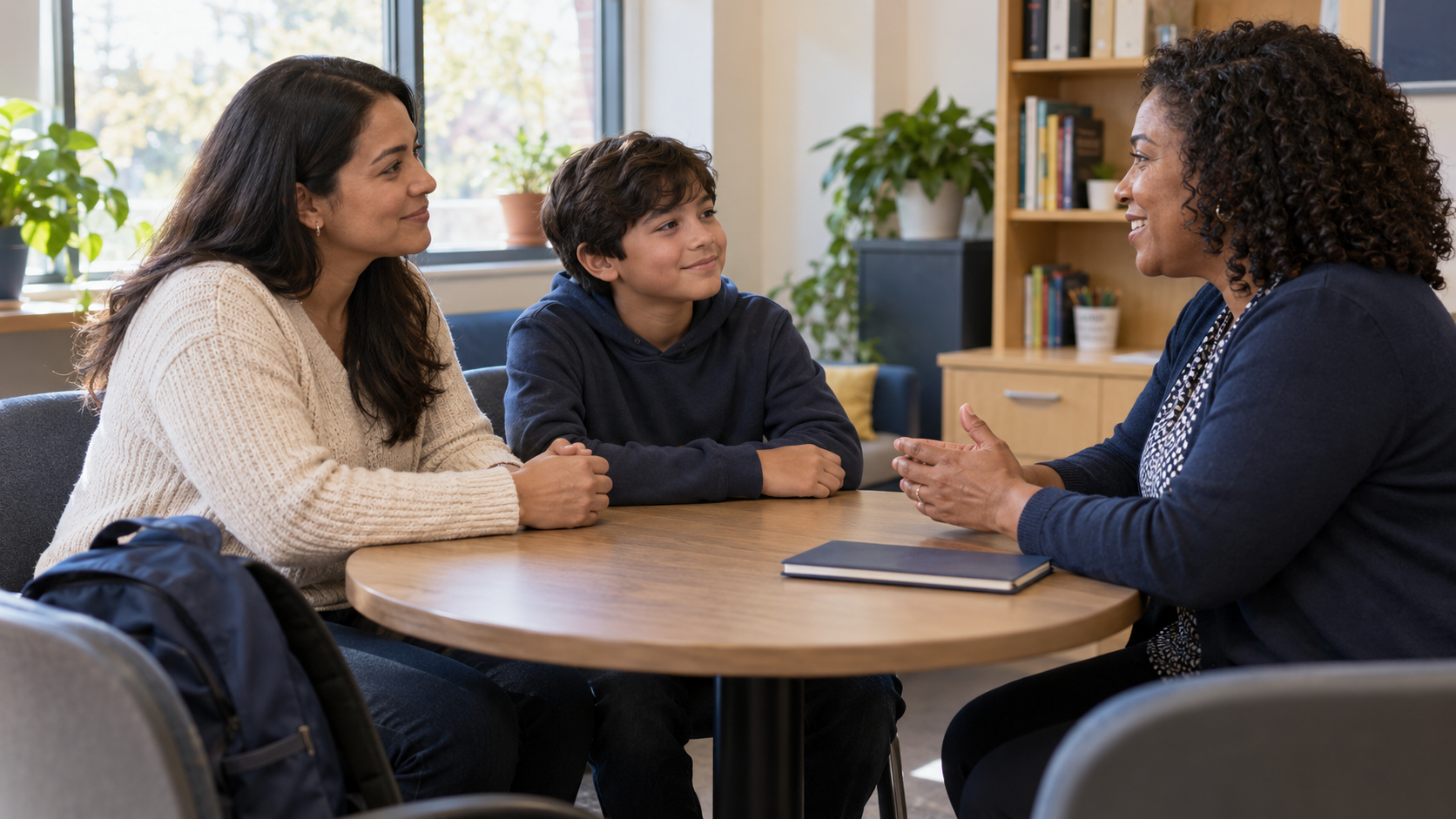
Contact the teacher, school nurse, or counselor before the first day back. Explain when the injury happened, which symptoms are present, and what the provider recommended. Choose one school contact to help coordinate updates across classes.
Useful questions include:
Where can my child take a quiet rest break?
Who should they tell if symptoms increase?
Which assignments or tests can be postponed or reduced?
How will we adjust attendance and workload?
Who will communicate restrictions to the PE teacher and coach?
Share changes with the school. A child who manages the morning may still struggle later in the day.
Request support that fits the symptoms
Accommodations should respond to the child's actual difficulties. Possible temporary supports include:
Headache or fatigue: scheduled breaks, a shorter school day, and less homework.
Trouble concentrating or slower thinking: extra time, shorter assignments, written instructions, and fewer tests at once.
Light or noise sensitivity: a quieter work area and adjustments to bright screens, lighting, or noisy settings.
Difficulty keeping up: teacher-provided notes and help prioritizing essential work.
Ask the school to avoid creating a large pile of missed work that your child must immediately finish. Agree on what matters now and what can wait. Not every child needs every accommodation, and support should change as recovery progresses.
Increase learning gradually
Check in briefly after school: Which activities were manageable? What brought on symptoms? Did breaks help? Share that information with the school and healthcare provider.
If symptoms noticeably worsen during a task, have your child pause and tell an adult. The plan may need shorter work periods, more breaks, or a reduced day. If symptoms keep worsening or prevent participation despite support, contact the provider.
As your child improves, gradually increase attendance and workload and reduce accommodations. If symptoms persist or progress stalls, arrange follow-up rather than repeatedly pushing through the same difficulty.
School attendance does not clear a child for sports
A child may be ready for classroom learning before being ready for contact sports or other activities that could cause another head injury. Keep coaches and PE staff informed about restrictions. Ask the provider which playground, PE, and recreational activities are appropriate during recovery.
CDC sports-return guidance requires healthcare-provider approval and describes a six-step return-to-play progression. Attending school, feeling better, or finishing homework does not replace that approval. Do not let a child with a suspected concussion return to play on the day of the injury.
When to get urgent help
Call 911 or go to an emergency department immediately for a worsening headache that does not go away, repeated vomiting, a seizure, increasing confusion or unusual behavior, slurred speech, weakness or numbness, one pupil larger than the other, double vision, or marked drowsiness or difficulty waking your child.
Contact the healthcare provider promptly for symptoms that worsen without these emergency signs, or for trouble managing school despite accommodations. Do not wait for the next routine school meeting to report a concerning change.
This article provides general education and does not replace individualized medical advice. Follow your child's healthcare provider's recovery plan.
By Sang Hyun Ahn, MD